
Radiology mistakes can lead to misdiagnoses, delayed treatments, and serious health consequences. If you’re facing the aftermath of a radiology error, navigating the legal process can feel overwhelming. If you're searching for a Valparaiso radiology malpractice attorney, our experienced team is dedicated to helping victims like you get the compensation you deserve. Let us fight for your rights while you focus on your recovery.
4 Indiana Ave Valparaiso, IN 46383
in**@*******aw.com
(219) 464-3246
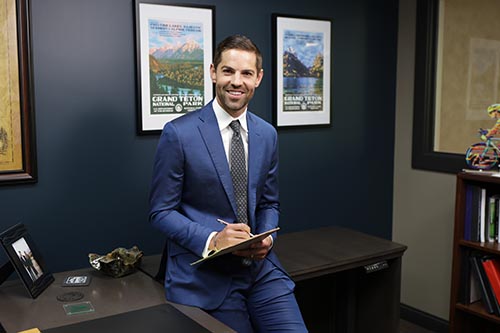
When radiology works, it saves lives. When it fails, the damage can be irreversible.
At Langer & Langer, we represent patients harmed by radiologist mistakes, from misread MRIs to delayed CT results. Our experienced Valparaiso radiology malpractice attorneys know when something has gone awry inside imaging rooms and how hospitals try to cover it up.
With over 100 years of combined malpractice experience in Indiana, we don’t just file claims – we build winning cases. We work with top medical experts, navigate Indiana’s complex malpractice system, and pursue full compensation for the harm you’ve suffered.
You pay nothing unless we win. Your consultation is free, your case is confidential, and your recovery is our priority.
At Langer & Langer, we don’t just understand malpractice law; we apply it specifically to diagnostic imaging failures. Our legal team investigates where radiologists, imaging centers, or hospitals violated medical standards, and we connect those failures directly to client harm.
We work with certified radiology experts to review scan records, identify interpretation or reporting errors, and support claims before Indiana’s Medical Review Panel – a required legal step before filing a medical malpractice lawsuit.

When a diagnostic mistake disrupts your life, your legal response should be precise, strategic, and grounded in evidence. Our expert attorneys handle radiology malpractice claims thoroughly and decisively, by building them like they’re going to trial from day one.
Here is how:
Gathering Evidence: We retrieve and analyze your imaging files, PACS timestamps, and reporting history to identify where the failure occurred.
Engaging Medical Experts: We consult board-certified radiologists who provide sworn opinions on how the standard of care was violated.
Controlling Communications: We handle all interaction with insurance companies, hospital attorneys, and medical risk managers, so nothing you say can be used to deny, delay, or reduce your compensation.
Filing with Indiana’s Medical Review Panel: We ensure compliance with § 34-18 legal requirements by submitting your complaint to the panel before proceeding to court.
Calculating Damages: We document the full impact of the error – from delayed diagnosis and treatment consequences to long-term financial losses.
Preparing for Litigation: We build your case with courtroom-level precision from expert testimony to damages modeling, even when a settlement is likely.
You may not know whether a radiologist’s mistake was legally considered malpractice. That’s our job, and we prove it by establishing the four elements required under Indiana law.
Here’s how we do it:
Duty of Care
Every radiologist has a legal obligation to accurately interpret scans and report critical findings in a timely manner. We show that this duty applies directly to your case.
Breach of Duty
Using independent radiology experts, we pinpoint how that obligation was violated, whether by overlooking clear abnormalities, delaying reports, or failing to communicate urgent results.
Causation
We connect the radiologist’s mistake to the harm you suffered. This may involve missed treatment windows, progression of disease, or permanent complications that could’ve been avoided.
Measurable Harm
We compile medical records, employment history, and financial data to prove how the delayed diagnosis impacted your health, income, and quality of life.
Radiology malpractice often involves more than one failure and more than one party responsible for what went wrong. At our law firm, we don’t stop at the radiologist. We investigate the full chain of responsibility to hold every negligent party legally accountable.
Common defendants in a radiology malpractice claim may include:
Radiologists
For missing clear signs of disease, delaying reports, or failing to alert treating physicians about urgent findings.
Referring Physicians
If they ignore abnormal results, delay follow-up care, or misinterpret the radiology report, allowing a condition to worsen.
When staffing shortages, outdated imaging protocols, or supervision failures lead to critical delays or communication breakdowns.
Imaging Centers
For technical problems like unreadable scans, improperly calibrated machines, or incomplete image sets that lead to misdiagnosis.
Establishing negligence is not just about identifying a single error. It is about tracing how each breakdown contributed to the harm and showing how it could have been prevented. Our Valparaiso attorneys know how to connect the dots, even when liability is shared across multiple providers.
Diagnostic imaging errors are not just technical oversights; they lead to missed diagnoses, delayed care, and in many cases, irreversible harm. Our attorneys handle radiology malpractice cases across Indiana where critical scan-related failures changed a patient’s outcome.
We routinely litigate cases involving:
When a Valparaiso radiologist’s mistake leads to harm, we work to recover the full scope of damages permitted under Indiana’s Medical Malpractice Act.
We pursue:
Medical expenses: Covers past treatment, hospitalization, imaging, surgeries, therapy, and projected future care needs.
Lost income: Includes time away from work and reduced future earning capacity due to your condition.
Non-economic damages: Compensation for physical pain, emotional distress, and loss of enjoyment of daily life.
Disability or disfigurement: When the injury results in permanent physical limitations or visible changes.
Loss of consortium: In qualifying wrongful death cases, spouses or family members may recover for the impact on their relationship.
We focus on proving both short-term and long-term impact, so your recovery reflects more than just the cost of care.
The harm caused by radiology errors is often not speculative, but measurable, permanent, and often avoidable. We handle high-stakes claims where delayed or inaccurate imaging led to life-changing outcomes.
We handle cases involving:
Late-stage cancer
Missed tumors on scans result in diagnosis at advanced stages, reducing treatment options and survival rates.
Disease progression
Missed signs of infection, organ damage, or autoimmune disorders result in worsening conditions and prolonged treatment.
Brain injuries
Head trauma is not properly evaluated by CT or MRI, leading to preventable neurological damage.
Uncontrolled internal bleeding
Active bleeding is missed on emergency imaging, delaying surgical intervention.
Permanent disability after stroke
Signs of stroke go undetected or unreported in time to administer clot-busting treatment.
Once we take on a radiology malpractice claim, our Valparaiso legal team handles everything from document collection to litigation strategy with focus, urgency, and zero upfront cost.
Here’s how we move your case forward:
1. Initial Case Review:
We examine your timeline, diagnosis history, and imaging reports to identify potential red flags.
2. Medical Record Analysis:
Our Valparaiso malpractice lawyers request and review all relevant imaging, radiology reports, and provider notes to screen for signs of medical malpractice.
3. Expert Consultation:
We work with independent, board-certified radiology specialists to verify interpretation errors or reporting delays.
4. Legal Strategy Development:
We prepare your case in compliance with Indiana’s malpractice procedures, including filing with the Medical Review Panel, and build a litigation plan aligned with your damages.
Under Indiana Code § 34-18-7-1, most radiology medical malpractice claims must be filed within two years of the date the alleged negligence occurred.
However, some cases fall under exceptions, including:
Malpractice timelines in Indiana are strict and not easily paused. Miss the deadline, and your right to compensation is likely gone, regardless of how strong your case may be.
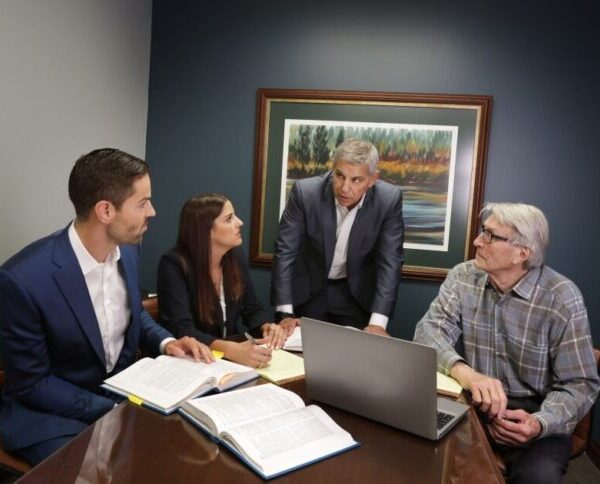
Langer & Langer has handled radiology malpractice cases across Valparaiso and Porter County for decades. We’re familiar with how local hospitals manage imaging, how diagnostic records are stored, and how communication failures typically occur.
We also know the Porter County court system, from how local panels review cases to how malpractice claims are defended in this jurisdiction.
That local knowledge helps us move faster, collect better evidence, and anticipate how your case will be handled before we even file.
Clients in Valparaiso do not just hire us because we promise to care. They hire us because we know how to prove malpractice, deal with local hospitals, and win complex diagnostic cases.
People come to us with serious harm and one expectation: competent, responsive representation.
Langer & Langer is recognized statewide for successfully litigating complex medical negligence cases, especially those involving radiology errors, missed diagnoses, and delayed treatment.
Our malpractice results include:
$2 million settlement
$1.6 million recovery
$1.275 million settlement
$1.25 million resolution
$950,000 recovery
$750,000 settlement
We’ve also been honored by:
We value recognition, but what matters most is what our clients say after the case is over:
“Steve Langer and his team truly cared about my case. They listened, answered every question, and fought hard to get justice for my mom.”
- Tina Perez, former client
Yes. To prove a radiology malpractice case, you need medical experts who confirm that the radiologist’s actions breached the standard of care and caused your injury or delay in diagnosis.
Yes. You can still sue for Valparaiso radiology malpractice if your condition improves. The claim is based on whether medical negligence caused harm, not on your final recovery outcome.
If your radiology report contradicts your doctor’s diagnosis, request both records and consult a malpractice attorney. Contradicting findings may suggest a radiology interpretation error or failed communication.
To get your imaging records, contact the medical records department at the Valparaiso hospital or imaging facility. Request all related scans, reports, and timestamps. Your attorney can help secure and review them.
Yes. A radiologist is accountable for missing a cancer diagnosis if they fail to detect visible signs on imaging. This failure may meet Indiana’s legal definition of medical negligence.
If multiple doctors were involved in the radiology error, each may share legal responsibility. We assess whether radiologists, hospitals, or referring physicians contributed to the harm and include all liable parties.
Indiana medical malpractice damage caps limit total compensation to $1.8 million. A provider’s liability is capped at $500,000, and the Indiana Patient’s Compensation Fund pays the rest, if the claim qualifies.
The Medical Review Panel in Indiana must issue an opinion within 180 days after the panel is formed. Filing a panel complaint pauses the statute of limitations until 90 days after the panel opinion is delivered.
If you suspect a radiology malpractice error from a Valparaiso healthcare provider, you don’t have to guess, wonder what went wrong, or navigate it alone. If you’re ready to take the next step, we’re ready to review your case.
Call 219-464-3246 or fill out our contact form.
Together, let’s find out what your options are and what accountability looks like.



© 1980-2026 Langer & Langer • All Rights Reserved
Copyright © 1980-2026 All Rights Reserved.
Past results do not guarantee any future outcome, and every case is different.
We improve our products and advertising by using Microsoft Clarity to see how you use our website. By using our site, you agree that we and Microsoft can collect and use this data.
Have legal questions or need expert advice? Our experienced team is here to help.
Langer and Langer
Accessibility Statement
Compliance status
We firmly believe that the internet should be available and accessible to anyone, and are committed to providing a website that is accessible to the widest possible audience, regardless of circumstance and ability.
To fulfill this, we aim to adhere as strictly as possible to the World Wide Web Consortium’s (W3C) Web Content Accessibility Guidelines 2.1 (WCAG 2.1) at the AA level. These guidelines explain how to make web content accessible to people with a wide array of disabilities. Complying with those guidelines helps us ensure that the website is accessible to all people: blind people, people with motor impairments, visual impairment, cognitive disabilities, and more.
This website utilizes various technologies that are meant to make it as accessible as possible at all times. We utilize an accessibility interface that allows persons with specific disabilities to adjust the website’s UI (user interface) and design it to their personal needs.
Additionally, the website utilizes an AI-based application that runs in the background and optimizes its accessibility level constantly. This application remediates the website’s HTML, adapts Its functionality and behavior for screen-readers used by the blind users, and for keyboard functions used by individuals with motor impairments.
If you’ve found a malfunction or have ideas for improvement, we’ll be happy to hear from you. You can reach out to the website’s operators by using the following email
Screen-reader and keyboard navigation
Our website implements the ARIA attributes (Accessible Rich Internet Applications) technique, alongside various different behavioral changes, to ensure blind users visiting with screen-readers are able to read, comprehend, and enjoy the website’s functions. As soon as a user with a screen-reader enters your site, they immediately receive a prompt to enter the Screen-Reader Profile so they can browse and operate your site effectively. Here’s how our website covers some of the most important screen-reader requirements, alongside console screenshots of code examples:
Screen-reader optimization: we run a background process that learns the website’s components from top to bottom, to ensure ongoing compliance even when updating the website. In this process, we provide screen-readers with meaningful data using the ARIA set of attributes. For example, we provide accurate form labels; descriptions for actionable icons (social media icons, search icons, cart icons, etc.); validation guidance for form inputs; element roles such as buttons, menus, modal dialogues (popups), and others. Additionally, the background process scans all the website’s images and provides an accurate and meaningful image-object-recognition-based description as an ALT (alternate text) tag for images that are not described. It will also extract texts that are embedded within the image, using an OCR (optical character recognition) technology. To turn on screen-reader adjustments at any time, users need only to press the Alt+1 keyboard combination. Screen-reader users also get automatic announcements to turn the Screen-reader mode on as soon as they enter the website.
These adjustments are compatible with all popular screen readers, including JAWS and NVDA.
Keyboard navigation optimization: The background process also adjusts the website’s HTML, and adds various behaviors using JavaScript code to make the website operable by the keyboard. This includes the ability to navigate the website using the Tab and Shift+Tab keys, operate dropdowns with the arrow keys, close them with Esc, trigger buttons and links using the Enter key, navigate between radio and checkbox elements using the arrow keys, and fill them in with the Spacebar or Enter key.Additionally, keyboard users will find quick-navigation and content-skip menus, available at any time by clicking Alt+1, or as the first elements of the site while navigating with the keyboard. The background process also handles triggered popups by moving the keyboard focus towards them as soon as they appear, and not allow the focus drift outside it.
Users can also use shortcuts such as “M” (menus), “H” (headings), “F” (forms), “B” (buttons), and “G” (graphics) to jump to specific elements.
Disability profiles supported in our website
Additional UI, design, and readability adjustments
Browser and assistive technology compatibility
We aim to support the widest array of browsers and assistive technologies as possible, so our users can choose the best fitting tools for them, with as few limitations as possible. Therefore, we have worked very hard to be able to support all major systems that comprise over 95% of the user market share including Google Chrome, Mozilla Firefox, Apple Safari, Opera and Microsoft Edge, JAWS and NVDA (screen readers).
Notes, comments, and feedback
Despite our very best efforts to allow anybody to adjust the website to their needs. There may still be pages or sections that are not fully accessible, are in the process of becoming accessible, or are lacking an adequate technological solution to make them accessible. Still, we are continually improving our accessibility, adding, updating and improving its options and features, and developing and adopting new technologies. All this is meant to reach the optimal level of accessibility, following technological advancements. For any assistance, please reach out to