
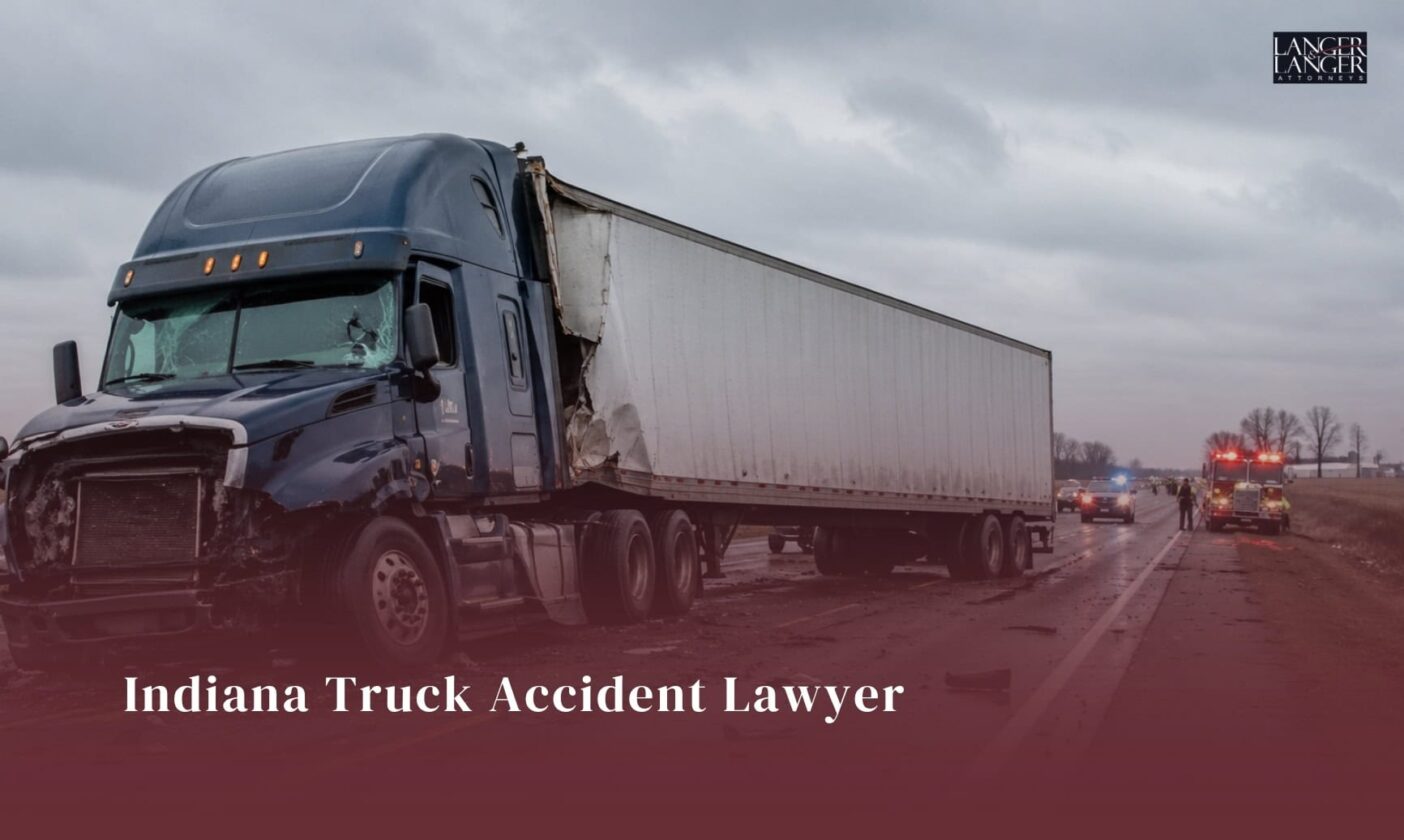
The moment a commercial truck crash is reported, the carrier’s claims team starts moving. Investigators reach the scene. Adjusters pull driver records and dispatch logs. Defense attorneys go on retainer. All of this happens within hours, often before you have spoken to a single doctor.
Indiana recorded 4,910 large truck crashes in 2023, resulting in 126 fatalities and more than 1,800 injuries. That’s roughly 13 crashes a day across Indiana roads. Steven L. Langer has handled Indiana truck crash cases for over 46 years and leads Langer & Langer’s truck accident and personal injury practice. Call (219) 464-3246 or schedule a free consultation today. No fee unless we recover.
Why Indiana truck accident victims choose Langer & Langer:
- 46+ years representing Indiana crash victims
- 4.8 rating across 150+ verified Google reviews
- Two-Time Trial Lawyer of the Year, Indiana Trial Lawyers Association
- Named to Best Lawyers in America every year since 2014
- No recovery, no fee





What to Do Immediately After an Indiana Truck Crash
The decisions made in the first 48 hours after a truck crash often determine what a case is worth. Commercial carriers know this.
Do:
- Get medical attention the same day, even if you feel fine: Adrenaline masks pain. Spinal injuries and traumatic brain injuries can be asymptomatic at the scene and appear hours later. A treatment gap is the first argument an insurer uses to reduce your claim.
- Document the scene before it changes: Photograph the truck’s company name, USDOT number, and license plate. Capture vehicle damage, skid marks, and road conditions. Collect witness contact information before anyone leaves and request the police report immediately.
- Notify your own insurer that a crash occurred: Provide basic notice only. Do not describe fault or injuries until you have spoken to an attorney.
- Sign nothing the carrier sends you: A release can permanently end your right to further compensation. Never sign documents without legal review.
- Call a truck accident attorney before the evidence disappears: ELD data and the truck’s black box don’t preserve themselves. A legal hold placed early is what keeps that evidence available.
Don’t:
- Give a recorded statement to the carrier’s insurance adjuster.
- Post about the crash on social media. Insurers monitor activity after accidents.
- Accept a quick settlement before your injuries are fully diagnosed.
- Miss follow-up medical appointments, which defense teams use to argue your injuries are minor.
Call (219) 464-3246 for a free consultation. The call costs nothing. Waiting costs evidence.
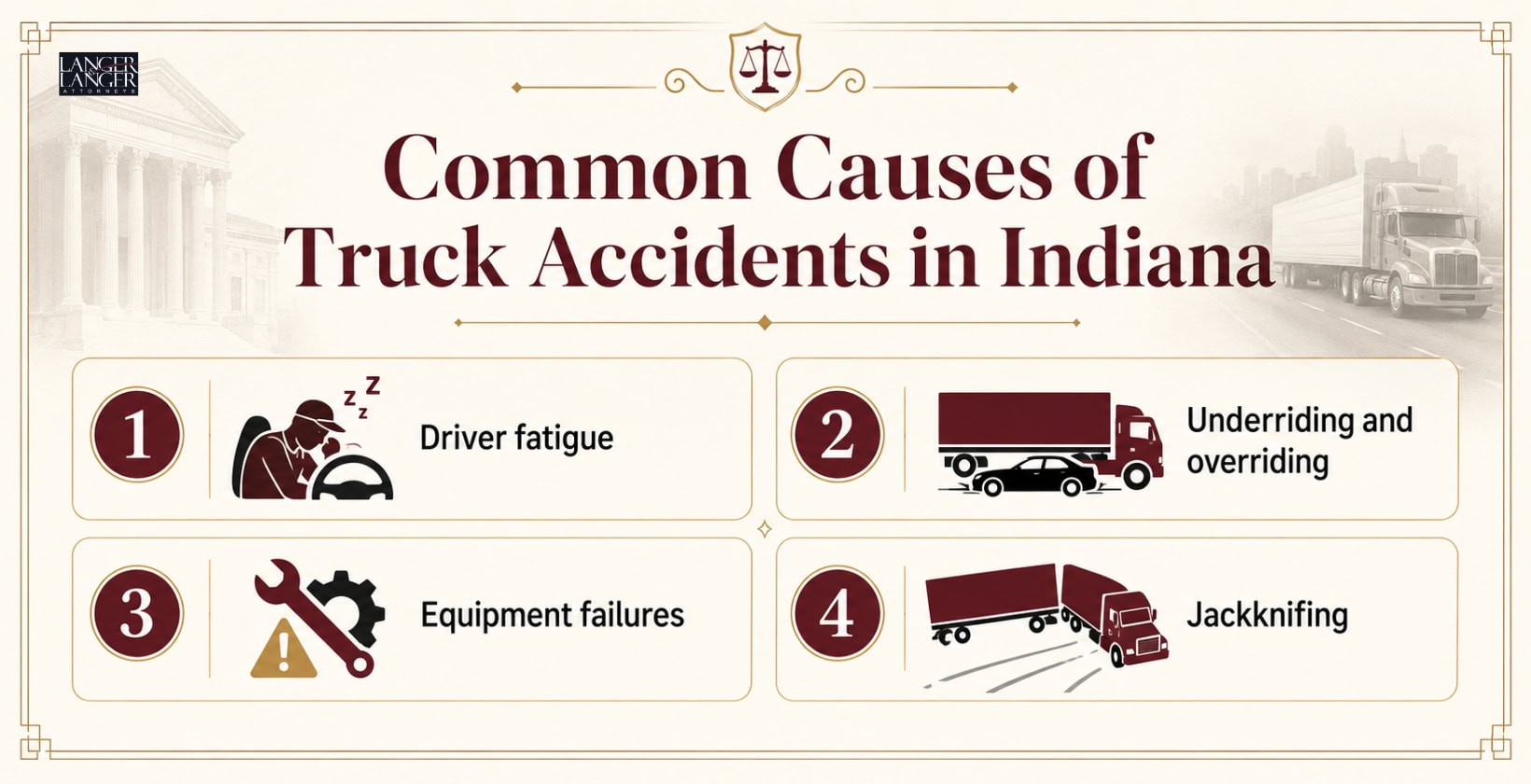
Indiana Truck Accident Types and Common Causes We Investigate
Each crash type generates a different evidence trail and requires a different investigative approach.
Jackknife Accidents
A jackknife happens when the trailer swings perpendicular to the cab during hard braking or a high-speed curve. Once the trailer swings on wet pavement or in emergency stops, adjacent vehicles have no reaction time. We establish fault through the truck’s ECM data, analyzing speed, brake input, and throttle position in the seconds before impact. Carrier maintenance records often reveal whether brake failures were known before the crash.
Rear-End Semi Crashes
The Indiana University Public Policy Institute identifies rear-end collisions as the most common large truck crash type on Indiana roads. At 65 mph, a fully loaded semi needs up to 40% more stopping distance than a passenger car under comparable conditions, per IIHS Fatality Facts: Large Trucks. Fatigue, distraction, and tailgating are the primary causes. The consequences range from serious spinal injuries to fatal override collisions. Securing ELD and dispatch data establishes how long the driver has been on duty.
Underride and Override Collisions
An underride collision occurs when a passenger vehicle slides beneath a truck trailer. Federal regulations require rear underride guards, but non-compliant, damaged, or absent guards allow vehicle rooftops to be sheared off entirely. Underride crashes are disproportionately fatal. Side underrides carry no equivalent mandatory guard requirement and produce even worse outcomes. We immediately examine the guard’s condition and FMCSA compliance to build a strong negligence claim.
Wide-Turn and Squeeze Play Accidents
A wide-turn crash happens when a truck driver swings left before turning right, sweeping the trailer into adjacent vehicles or trapping a car between the trailer and the curb. Any vehicle alongside the trailer during the turn absorbs the full force of the swing. We obtain dashcam footage and GPS tracking data to document the driver’s pre-turn lane positioning.
Blind Spot and No-Zone Crashes
A commercial truck has four no-zones where the driver’s visibility is eliminated: up to 20 feet ahead of the cab, 30 feet behind the trailer, two lanes wide on the right side, and a partial lane on the left. Merge collisions and side-impact crashes are the most common result. We document no-zone placement through relative vehicle positions, dashcam angles, and the driver’s GPS data at the moment of impact.
Hours-of-Service Violations
FMCSA rules limit commercial drivers to 11 hours of driving within a 14-hour window. Drivers must take a 30-minute break after 8 consecutive hours and cannot exceed 70 hours over any 8-day period. Fatigued driving severely impairs reaction times. The ELD mandate automatically records driving times. When a carrier falsifies logs, disables the device, or over-dispatches a driver, that data becomes the centerpiece of the liability case. The hours-of-service file is where the Indiana truck crash liability determinations begin.
Cargo Securement Failures
Federal regulations under 49 CFR Part 393 require every load to be properly secured with specific tie-downs based on cargo type and weight. Cargo that shifts or falls creates an immediate roadway hazard. Liability does not automatically rest with the driver. When a third-party shipper or freight broker loads the cargo, they bear direct responsibility for the securement failure. We identify who handled the load and whether they met federal standards.
Equipment Failures and Brake Defects
Federal and Indiana law require commercial trucks to be inspected and maintained on a documented schedule. Brake failure, tire blowouts, and steering defects can each extend liability beyond the driver to the trucking company’s maintenance program, a third-party service shop, or the component manufacturer. Pre-trip inspection logs and maintenance records establish what was known about a defect, and when, before it caused a crash. When a DUI truck driver contributed to the crash, mandatory post-crash drug and alcohol test results join the evidence file.
Why Indiana Truck Accident Cases Are More Complex Than Car Accident Claims
Four factors separate truck accident cases from standard auto claims, and each one directly affects who pays and how much.
- Federal oversight sits on top of Indiana state law: Every commercial truck in interstate commerce is governed by the Federal Motor Carrier Safety Administration (FMCSA), which sets binding standards on driver qualifications, hours of service, vehicle maintenance, cargo securement, and drug testing. A single FMCSA violation is direct evidence of negligence. As Indiana personal injury attorneys with over four decades of experience, we know where carriers consistently cut corners.
- Multiple parties are often liable: The trucking company may be liable under respondeat superior for the driver’s conduct, and independently liable for negligent hiring, inadequate training, or failure to enforce safety policies. The cargo loader, the maintenance shop that serviced the brakes, and the manufacturer of a defective component can each carry a share of responsibility.
- The defense is already organized: Commercial trucking policies run into the millions. Carriers maintain dedicated claims teams and accident investigators who deploy the moment an incident is reported. Settling before identifying all liable parties can permanently limit your compensation.
- Federal law sets substantial minimum insurance requirements: Under 49 CFR 387.9, most interstate carriers must carry a minimum of $750,000 in liability coverage. Trucks hauling hazardous materials must carry up to $5,000,000. A carrier offering a quick $40,000 settlement is protecting a policy many times that amount and hoping you don’t know it.
Common Injuries in Indiana Truck Accident Cases
The size and weight of a commercial truck mean injuries are rarely minor. Common outcomes include:
- Spinal cord injuries: Cervical, thoracic, and lumbar fractures can cause partial or permanent paralysis, often requiring lifelong care and adaptive equipment.
- Traumatic brain injuries: Violent deceleration forces cause TBI even without visible head trauma. Symptoms can take days to appear and months of imaging to confirm.
- Crush injuries and amputations: Underride crashes and rollovers collapse the passenger compartment. Limb loss is permanent and requires prosthetics, multiple surgeries, and long-term rehabilitation.
- Burn injuries: Fuel fires follow tank ruptures on impact. Burns require emergency intervention, scar revision, and psychological treatment.
- Internal organ damage: Ruptured spleens, liver lacerations, and internal bleeding are invisible at the scene and diagnosed hours after the crash.
- Pelvic and femur fractures: Common in side-impact collisions, typically requiring surgery and months of rehabilitation before maximum medical improvement is reached.
Who Can Be Held Liable
Most victims assume the driver is the only defendant, a mistake that limits financial recovery.
- The Trucking Company: Liable under respondeat superior for the driver’s conduct. They face independent liability for negligent hiring, poor safety enforcement, or scheduling that forces hours-of-service violations.
- The Cargo Shipper or Freight Broker: Liable when improperly loaded or unsecured freight contributes to a crash.
- Third-Party Maintenance Companies: Responsible when faulty repairs or missed service intervals cause mechanical failure.
- Manufacturers: Enter the case if a defective part, most commonly brake components or steering assemblies, caused the crash.
We identify every potentially liable party before settlement discussions begin to prevent you from closing off viable claims prematurely.
How We Build Your Indiana Truck Accident Case
Truck accident liability is proven with data. The records we preserve and analyze include:
- The ECM / Black Box: Captures speed, braking input, and throttle position seconds before impact.
- ELD Records: Disclose how long the driver had been on-duty and if HOS rules were violated.
- The Driver Qualification File: The carrier’s internal record of background checks, medical certifications, drug test history, and prior violations.
- Maintenance and Inspection Logs: Document whether known mechanical issues were addressed or ignored.
- Cargo Loading Records & Dashcam Footage: Sourced from the truck cab, nearby businesses, and INDOT highway cameras.
- Cell Phone and Dispatch Records: Subpoenaed phone records reveal active calls, texts, and app usage at the moment of impact. Carrier dispatch records document whether the driver was under delivery pressure that encouraged the hours or speed that caused the crash.
Carriers must retain ELD data for six months under FMCSA rules, but those records disappear quickly without a formal legal hold. We deploy qualified accident reconstruction experts when disputed facts require independent technical analysis. Our case results show what evidence-building produces for clients.
What Damages Can You Recover?
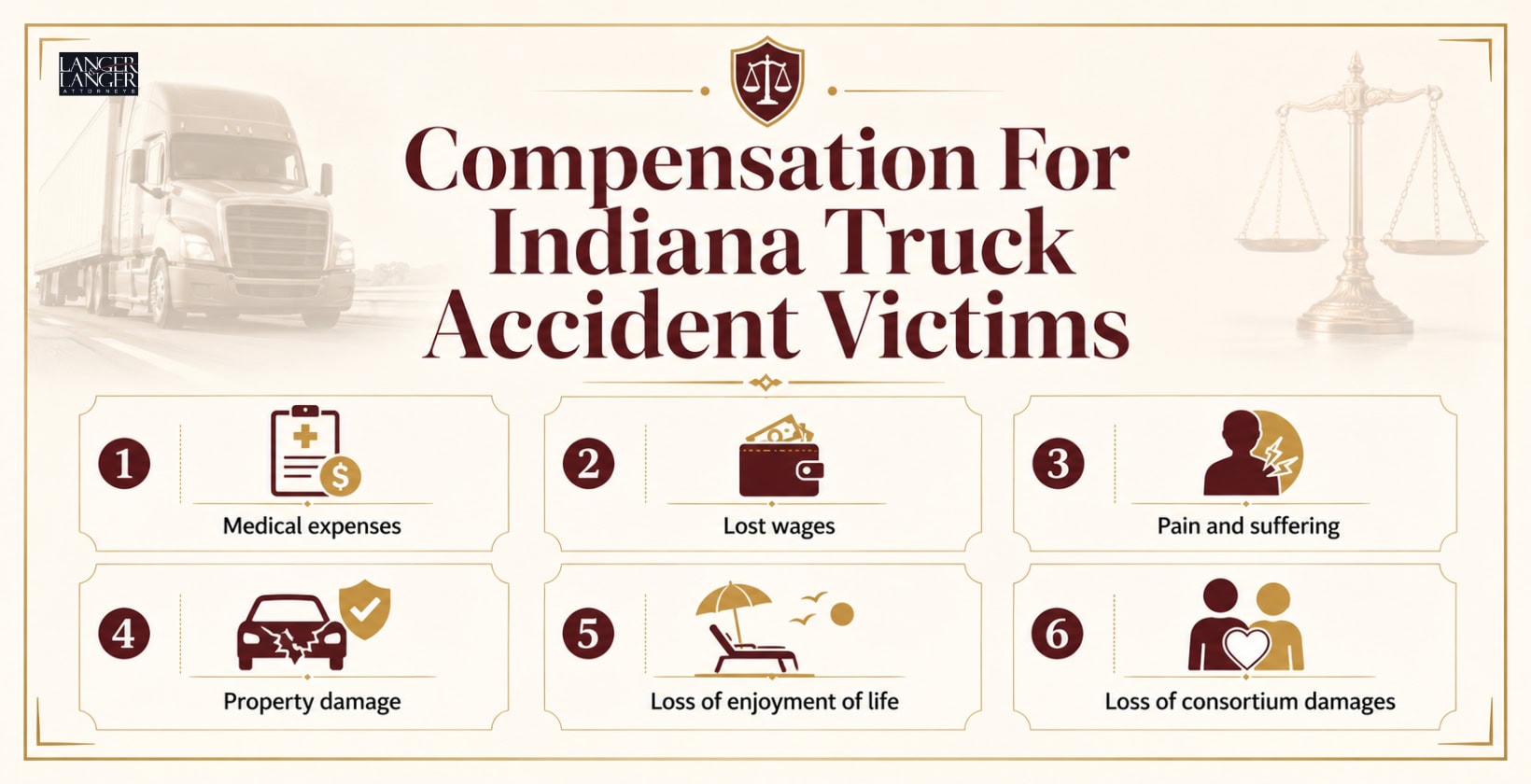
Indiana does not cap non-economic damages in personal injury cases. Recoverable damages include:
- Past and future medical expenses, emergency care, surgery, hospitalization, rehabilitation, and long-term treatment for permanent injuries
- Lost wages and reduced future earning capacity
- Permanent disability and disfigurement
- Pain and suffering
- Loss of enjoyment of life
- Property damage to the vehicle, gear, and personal property
- Wrongful death damages for surviving family members
Traumatic brain injury and catastrophic injury cases require precise medical and economic expert testimony to establish lifetime losses. Fatal truck crashes proceed under Indiana’s wrongful death statutes, handled directly by our Indiana wrongful death attorneys. Where a carrier’s conduct was egregious, such as knowingly dispatching an unfit driver or falsifying logs, punitive damages are available.
Call (219) 464-3246 for a free consultation. We review your medical records, crash data, and available insurance policies to give you an honest case assessment. No fee unless we recover for you.
Indiana Laws That Govern Your Truck Accident Claim
Statutes and federal regulations define who is liable, what you can recover, and how long you have to act.
- IC 34-51-2-6: Modified Comparative Fault: Indiana reduces your compensation by your percentage of fault. At 51% or more assigned to you, you recover nothing. Carriers cite this rule before evidence is reviewed. ELD records, HOS violations, and maintenance logs are what counter it.
- IC 34-11-2-4: Statute of Limitations: You have 2 years from the crash date to file a personal injury claim. Waiting weakens every case: witnesses forget, surveillance footage gets overwritten, and evidence that exists today is gone by month 20. The investigation that determines your recovery starts at the beginning, not the deadline.
- FMCSA Hours-of-Service Rules (49 CFR Part 395): FMCSA limits commercial drivers to 11 hours of driving in a 14-hour window, 10 consecutive hours off between shifts, and 70 hours total per 8-day period. These are binding regulations, not guidelines. A violation at the time of a crash is direct evidence of negligence, regardless of what the driver claims.
- FMCSA Cargo Securement Rules (49 CFR Part 393): Federal regulations specify how cargo must be secured by type, weight, and configuration. A violation in the tie-down count, device rating, or overhang limit is a direct regulatory failure and the basis for a negligence claim against whoever loaded the cargo.
- Government Vehicle Crashes (IC 34-13-3-6 / IC 34-13-3-8): A tort claim notice must be filed before you can sue if your crash involved a government-owned vehicle. The deadline is 270 days for a state entity such as INDOT, and 180 days for a city or county entity. Missing either deadline bars your claim regardless of injury severity.
Our Results in Indiana Truck Accident Cases
|
Result |
Type |
Case |
|
$600,000 |
Settlement |
Truck Crash |
|
$246,000 |
Settlement |
Truck Crash |
Prior results do not guarantee a similar outcome. Every case is unique, and the value of any claim depends on its specific facts.
Reviews
|
Robert and his entire team are the pinnacle of the legal representation that you want one your side fighting for you when you have been wronged. His thoughtfulness, sincerity, and determination regarding my situation are greatly appreciated. Thank you so much for all you have done for me and I know if future legal issues arise that I can count you on to not only fight for me but to effectively obtain the type of resolution that I deserve. Thanks again Robert and Megan! I appreciate you guys and can’t recommend you enough!! Stephanie S II ★★★★★ |
|
Steve Langer is an amazing attorney, but also person. He would always make sure I felt comfortable, I’ve never been through an experience like this. Everyone that works with him is also very professional and knowledgeable. I couldn’t have asked for a better team for my case. If you want someone that is going to make you feel heard and treat you like family, this is the right team for you. Thank you all for your hard work and dedication for me and my family! Hope Daugherty II ★★★★★ |
Additional client accounts are on our verified client testimonials page.
Why Choose Langer & Langer
Steven L. Langer holds the Fellow designation from the American College of Trial Lawyers, a recognition granted to fewer than 1% of licensed U.S. attorneys. He has been recognized by Super Lawyers every year since 2008, ranked in the Top 50 for Indiana, named one of the Best Lawyers in America since 2014, and awarded Lawyer of the Year in 2024. The Indiana Trial Lawyers Association named him Trial Lawyer of the Year twice. Robert A. Langer leads the personal injury practice with the same trial-ready approach.
National trucking carriers and their defense teams know which firms take cases to trial and which ones will settle under pressure. Our 46-year record in Indiana reflects a firm that prepares every case for the courthouse. That preparation shows up in negotiations before a trial date is needed. The complete record of peer awards and recognition is listed on the firm credentials page.
The fee is contingent. You pay nothing unless Langer & Langer recovers for you. No upfront cost, no monthly retainer, no risk in calling.
Indiana Cities and Counties Served
Langer & Langer’s Valparaiso office serves Porter County, where the I-80/I-90 Indiana Toll Road carries some of the heaviest commercial freight volume in the Midwest. We represent truck accident victims throughout Northwest Indiana, including Porter County, Lake County, LaPorte County, Hammond, Gary, Portage, Merrillville, Crown Point, Schererville, and Michigan City.
Porter County and Lake County cases are handled by our Valparaiso truck accident team. We represent Merrillville truck accident victims and handle Zionsville semi-truck accident cases across Lake and Jasper counties. Our firm handles cases across every Indiana county, including Indianapolis, Fort Wayne, South Bend, Bloomington, Lafayette, Kokomo, and Elkhart. Consultations are available online.
Frequently Asked Questions
Do I Need a Lawyer for a Truck Accident in Indiana?
Yes. Indiana truck accident cases involve federal motor carrier regulations, multiple liable parties, and carriers with dedicated defense teams. A truck accident lawyer preserves evidence, identifies all responsible parties, and builds your claim before key records disappear.
How Long Does an Indiana Truck Accident Settlement Take?
Indiana truck accident settlements with clear liability resolve in 3 to 9 months. Complex cases involving catastrophic injuries or disputed fault run 18 months to 3 years. The most important variable is reaching maximum medical improvement before settling.
Is Indiana a No-Fault State for Truck Accidents?
No. Indiana is an at-fault state. The driver and carrier responsible for a truck accident are liable for your damages. Your recovery is reduced by your fault percentage, and you can still collect as long as your fault percentage stays below 51%.
How Much Is a Truck Accident Settlement Worth in Indiana?
Truck accident settlement value in Indiana depends on injury severity, lost income, available insurance limits, and fault evidence. Minor injury cases settle in the tens of thousands. Catastrophic injury and wrongful death cases regularly reach six figures or more.
How Much Does It Cost to Hire a Truck Accident Lawyer at Langer & Langer?
Hiring a truck accident lawyer at Langer & Langer costs nothing upfront. The fee is contingent: you pay nothing unless we recover compensation for you.
Call Langer & Langer: Free Consultation
Building a successful truck accident claim requires immediate investigation. Evidence holds, witness interviews, ELD requests, and accident reconstruction cannot wait. Black box data gets overwritten, and every week without an attorney gives the carrier’s team more time to build its defense.
Langer & Langer has represented Indiana truck accident victims since 1980. The consultation is free. If we take your case, you pay nothing unless we recover for you.
Call (219) 464-3246 today or schedule your free consultation online.
Prior results do not guarantee a similar outcome. Attorney Advertising.