

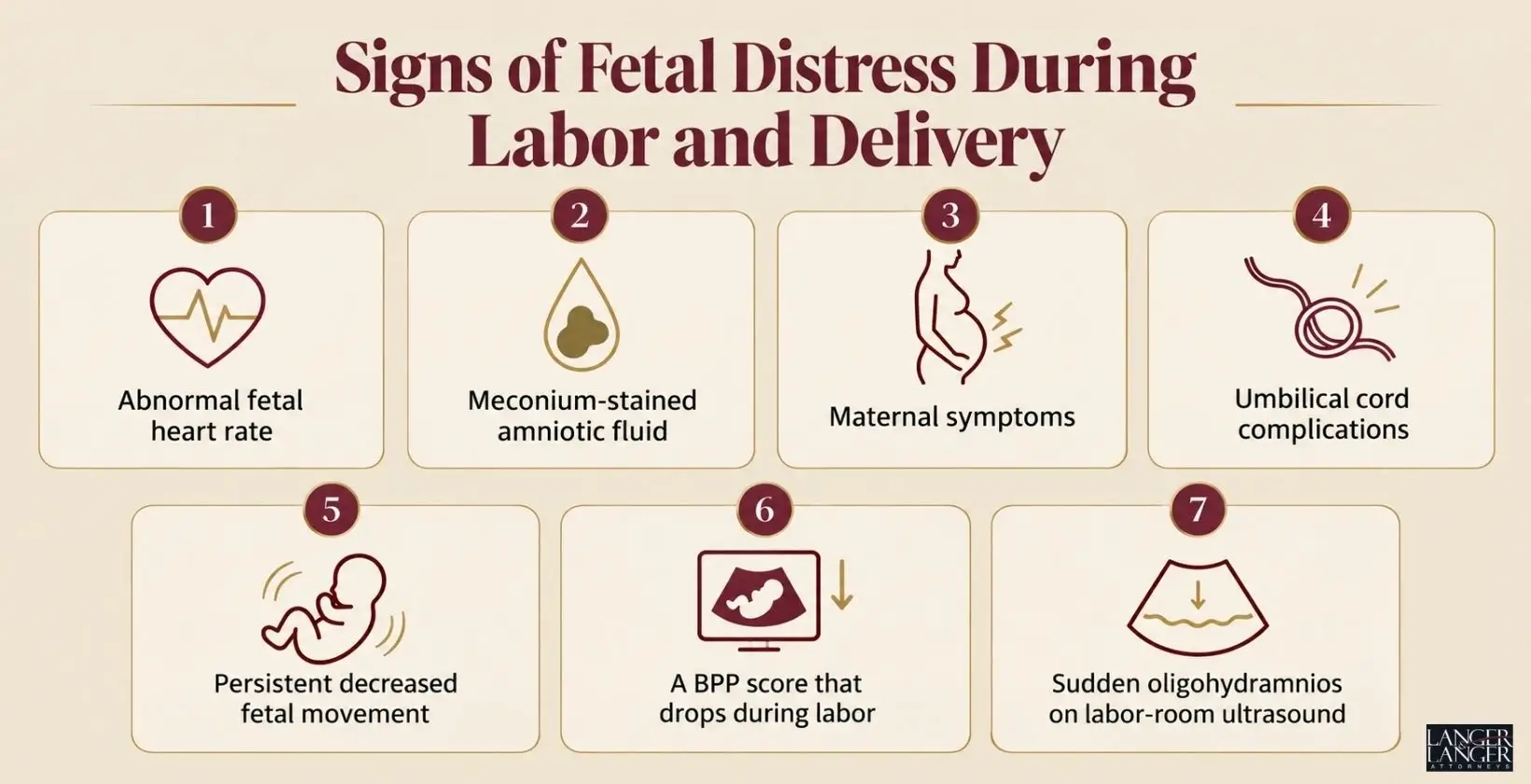
The signs of fetal distress recognized in Indiana hospital deliveries are abnormal fetal heart rate patterns, meconium-stained amniotic fluid, decreased fetal movement, abnormal biophysical profile (BPP) scores, low amniotic fluid (oligohydramnios), umbilical cord complications, and maternal symptoms such as vaginal bleeding or severe cramping. Each sign is time-stamped on the fetal monitoring strip, in nursing notes, or on ultrasound reports. Each requires a documented medical response under Indiana’s standard of care. When that response is delayed or missed, the consequences can include cerebral palsy, hypoxic-ischemic encephalopathy (HIE), seizure disorders, or stillbirth.
If your child was harmed during labor and you’re reading the medical record now, you’re trying to answer one question: Did the medical team recognize these signs in time? Those same records become the foundation of every Indiana birth injury claim.
Langer & Langer brings 46+ years of experience to Indiana medical malpractice and birth injury cases. This guide explains each sign in detail, what Indiana law requires after it appears, and what to do if the records suggest a missed warning.
Key Takeaways
- Indiana hospitals document “fetal distress” as non-reassuring fetal status (NRFS). Use this phrase when requesting your delivery records.
- Seven clinical signs trigger a mandatory response under the standard of care.
- The fetal monitoring strip is the central piece of evidence in most Indiana birth injury cases.
- Indiana requires every medical malpractice claim to pass through the Medical Review Panel (MRP) before a lawsuit can be filed.
- The statute of limitations is 2 years from delivery, with an 8th birthday outer limit for children injured before age 6.
- Damages are capped at $1.8 million per occurrence under IC 34-18-14-3 (for incidents after July 1, 2019).
What Is Fetal Distress and Why Do Indiana Doctors Call It Something Else?
Fetal distress describes a condition in which an unborn baby is not receiving enough oxygen or is under dangerous physical stress before or during delivery. Most Indiana hospitals and obstetricians no longer use this term in medical records. The current clinical standard is non-reassuring fetal status (NRFS), the phrase that appears in fetal monitoring strips, nursing notes, and delivery documentation across Indiana hospital systems.
If your child was harmed and you request medical records, look for this phrase specifically. Whether the record uses “fetal distress” or “NRFS,” the legal question is identical: did the medical team recognize it, and did they respond in time?
What Causes Fetal Distress?
Fetal distress most often results from a labor or pregnancy condition that reduces oxygen delivery through the placenta or umbilical cord. The most documented causes in Indiana birth injury claims are:
- Placental abruption. The placenta detaches from the uterine wall, cutting off oxygen and often causing vaginal bleeding.
- Umbilical cord prolapse or compression. The cord descends ahead of the baby or is pinched by the baby’s position.
- Prolonged or arrested labor. Labor that stalls or extends past expected timelines without intervention.
- Uterine rupture. Most commonly in mothers attempting a vaginal birth after cesarean (VBAC).
- Uterine hyperstimulation from Pitocin. Labor-augmenting medication given at doses that produce contractions too strong or too close together for the baby to tolerate.
- Maternal conditions. Preeclampsia, gestational diabetes, infection, or post-term pregnancy beyond 42 weeks.
Several of these are preventable or manageable when recognized early. The legal question in any Indiana birth injury claim is whether the medical team identified the risk factor and adjusted the delivery plan.
Signs of Fetal Distress During Pregnancy (Third Trimester)
Before labor begins, fetal distress shows up in prenatal monitoring and ultrasound, not on the labor-and-delivery strip. The signs at this stage are:
- Decreased fetal movement. Fewer than 10 movements in a 2-hour window during the third trimester trigger a clinical obligation to order follow-up testing.
- Non-reactive non-stress test (NST). The fetal heart rate isn’t accelerating in response to movement as it should.
- Abnormal biophysical profile (BPP) score. Scored out of 10. A 6 requires repeat testing within 24 hours. A 4 or below indicates a serious compromise.
- Low amniotic fluid (oligohydramnios). Measured by amniotic fluid index (AFI below 5 cm) or single deepest pocket (SDP below 2 cm).
- Vaginal bleeding or sudden severe abdominal pain. Possible indicators of placental abruption or uterine rupture.
The signs are the same at 32 weeks and 38 weeks. What changes is the clinical balance. A 32-week delivery carries prematurity risk. A 38-week delivery carries a higher distress risk. Indiana obstetricians are expected to weigh gestational age against the severity of what the records show.
Signs of Fetal Distress During Labor and Delivery
Once labor begins, electronic fetal monitoring is required throughout active labor in Indiana hospitals. The fetal monitoring strip captures abnormal heart rate patterns, the most frequently missed warning sign in Indiana birth injury claims. Seven signs require a documented medical response, each detailed below.
1. Abnormal Fetal Heart Rate
A normal fetal heart rate runs 110 to 160 beats per minute with natural variability. Rates below 110 (bradycardia), above 160 (tachycardia), without variability, or showing late decelerations after contractions require immediate evaluation. Under the ACOG and NICHD classification system, a Category III tracing (absent variability with recurrent late decelerations, variable decelerations, bradycardia, or a sinusoidal pattern) requires immediate intervention. A missed late deceleration pattern is among the most common documented errors in Indiana birth injury claims.
2. Meconium-Stained Amniotic Fluid
When a baby passes meconium before delivery, it stains the amniotic fluid green or brown, direct evidence of significant fetal stress. The immediate risk is meconium aspiration syndrome, where fluid inhaled at delivery obstructs the airway and causes oxygen deprivation. Protocol requires neonatal or respiratory specialists in the delivery room and airway suctioning initiated immediately upon identification. Failure to follow those steps after documented meconium leaves a clear evidentiary trail.
3. Maternal Symptoms
Vaginal bleeding during labor can indicate placental abruption, where the placenta separates from the uterine wall. Severe abdominal cramping or abnormal contractions may signal uterine rupture, particularly in mothers attempting a VBAC. A mother’s report of sudden absent fetal movement requires testing, not reassurance. Each of these, documented in the chart without a corresponding test order, is evidence that the provider failed to act on a known clinical warning.
4. Umbilical Cord Complications
Three complications interrupt oxygen flow: cord prolapse (the cord descends through the cervix ahead of the baby), cord compression (position or contractions pinch the cord), and nuchal cord (the cord wraps around the neck). Cord prolapse requires an emergency C-section within minutes. A provider who fails to recognize it on the tracing, or who delays the C-section when cord compression is documented, has committed the central act of negligence in a significant number of Indiana birth injury cases.
5. Persistent Decreased Fetal Movement
Reduced movement on intrapartum monitoring carries the same clinical weight during labor as it does prenatally. Fewer than 10 movements over a 2-hour window, or a sudden drop from the baby’s established pattern, requires a non-stress test or biophysical profile. Providers who note diminished movement on the labor record without ordering follow-up testing have failed a basic standard of care, particularly when paired with any other sign on this list.
6. A BPP Score That Drops During Labor
When labor concerns arise, the obstetric team may order a labor-room biophysical profile scoring breathing, body movement, muscle tone, amniotic fluid, and the non-stress test result. A score that drops from a previous reading, or that lands at 6 or below during active labor, calls for immediate delivery planning. A documented BPP drop without an adjusted delivery plan is evidence in Indiana birth injury claims.
7. Sudden Oligohydramnios on Labor-Room Ultrasound
Amniotic fluid measured during labor that falls below normal (AFI under 5 cm or SDP under 2 cm) is a real-time warning that cord compression risk is rising with each contraction. Sudden loss of fluid can also indicate occult membrane rupture or placental dysfunction. A documented drop without monitoring escalation or a revised delivery plan falls below the standard of care.
How Fetal Distress Causes Permanent Birth Injuries
Fetal distress causes permanent injury through one mechanism: oxygen deprivation to the developing brain, documented clinically as hypoxic-ischemic encephalopathy (HIE). The longer deprivation continues, the more extensive the damage. Brief but severe deprivation during active labor is enough to produce lasting neurological injury.
- Hypoxic-Ischemic Encephalopathy (HIE) is brain cell death from oxygen loss. HIE is the direct precursor to cerebral palsy in many cases, and its severity ranges from mild cognitive delays to profound, permanent motor and intellectual disability.
- Cerebral Palsy lawsuits in Indiana address a group of permanent movement disorders from brain damage before, during, or shortly after birth. Not every case involves malpractice, but oxygen deprivation during labor, where fetal distress signs were present and ignored, is one of its most preventable causes.
- Seizure Disorders arising in the first 24 to 72 hours after delivery are a direct clinical indicator of birth asphyxia. When they persist from infancy into childhood, they represent one of the documented long-term consequences of HIE.
- Stillbirth is the outcome when oxygen deprivation continues without delivery. Cord prolapse, placental abruption, and unmanaged shoulder dystocia each carry a stillbirth risk in Indiana when the medical response is absent or delayed.
Indiana’s Level III and Level IV NICUs administer therapeutic hypothermia (cooling therapy) to limit brain injury in newborns after HIE. Level III facilities include Franciscan Health Crown Point, recertified through May 2027, and Methodist Hospitals in Northwest Indiana. Riley Hospital for Children at IU Health in Indianapolis operates the region’s Level IV NICU. Both designations are issued by the Indiana State Department of Health under its perinatal levels of care system. Cooling therapy limits damage after it has occurred. Prevention requires recognizing the signs before the deprivation accumulates.
What Indiana Law Requires When These Signs Appear
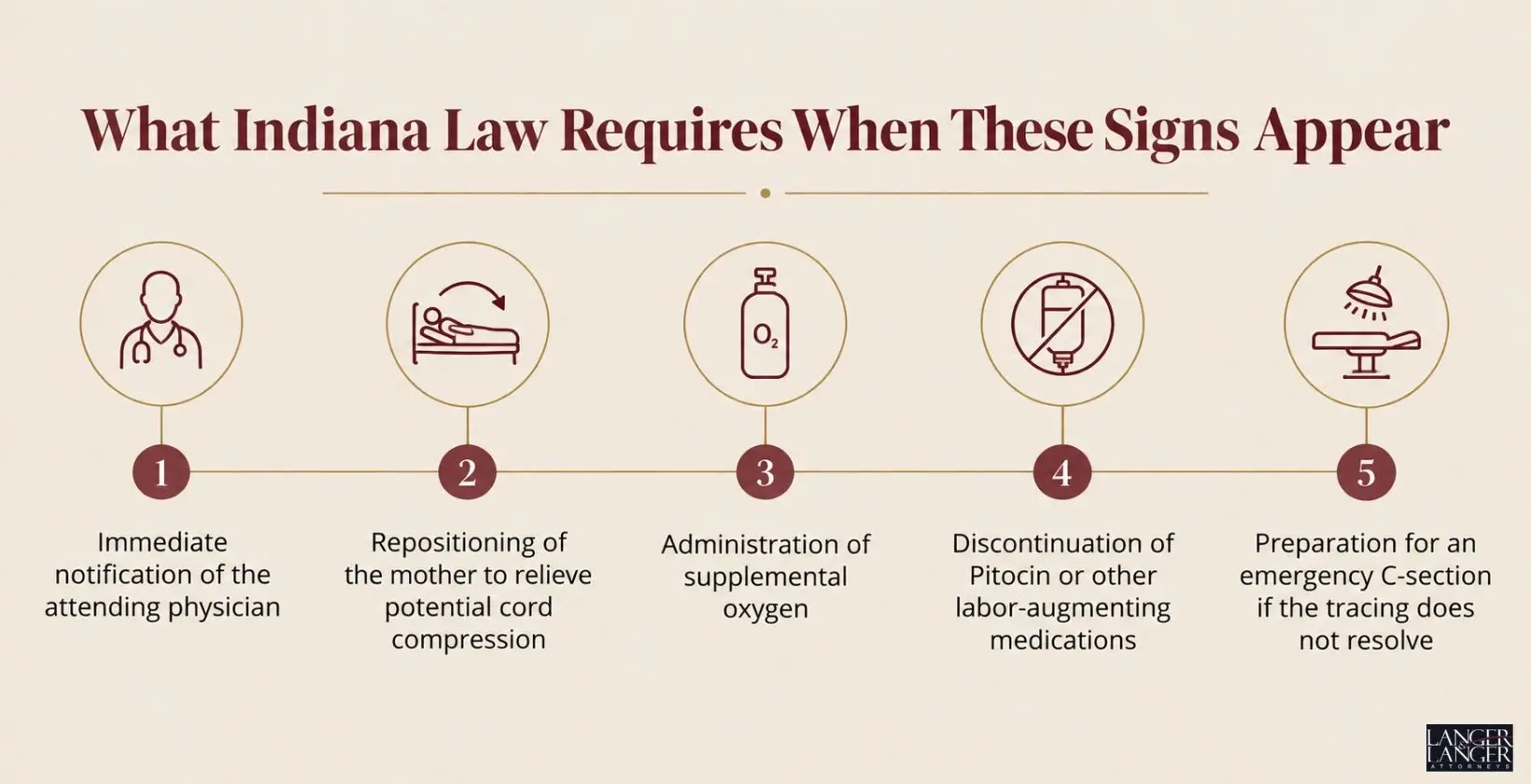
Indiana’s standard of care for intrapartum fetal monitoring follows ACOG protocols. Continuous electronic fetal monitoring is required during active labor. When a Category II or Category III tracing is identified, five steps are required:
- Immediate notification of the attending physician.
- Repositioning of the mother to relieve potential cord compression.
- Administration of supplemental oxygen.
- Discontinuation of Pitocin or other labor-augmenting medications.
- Preparation for an emergency C-section if the tracing does not resolve.
When nursing staff identify an abnormal tracing and do not escalate, or when the physician is notified and does not respond, both may be named in an Indiana malpractice claim. An institutional failure to maintain adequate fetal monitoring protocols may constitute Indiana hospital malpractice. The hospital and the individual provider can both be defendants in the same claim.
Filing a Claim: The Indiana Medical Review Panel
Every Indiana medical malpractice claim must pass through the Indiana Medical Review Panel (MRP) before a lawsuit can be filed in court. The MRP is a three-physician panel established under the Indiana Medical Malpractice Act (IC § 34-18-1 et seq.) that reviews the submitted evidence and issues a written opinion on whether the standard of care was met.
Filing a Proposed Complaint with the Indiana Department of Insurance tolls the 2-year statute of limitations while the panel process runs, but that filing must occur before the 2-year window closes. The MRP process typically takes 12 to 24 months from filing to written opinion.
A favorable MRP opinion gives your attorney a panel-endorsed basis for demand negotiations. An unfavorable opinion doesn’t end the case. It becomes evidence that the defense uses, which your attorney must counter with independent expert testimony. The panel’s written opinion isn’t binding on a jury.
Fetal monitoring strips, nursing notes, and delivery records degrade in quality and availability over time. The electronic health record (EHR) amendment history, which logs every edit made to the chart after delivery, becomes harder to obtain the longer families wait.
What to Do If You Suspect a Fetal Distress Birth Injury
The medical record is the single most important piece of evidence in any Indiana birth injury claim. The steps below preserve it before it can degrade, be amended, or be released to a party with an interest in disputing your claim.
- Request your complete delivery records, including the fetal monitoring strip. Use the phrase “non-reassuring fetal status (NRFS)” in the request. Ask for the EHR amendment history.
- Write down your timeline. When labor started, when concerns were raised, when each intervention occurred, and who was present.
- Don’t sign broad medical record authorizations from insurance companies or the hospital before consulting an attorney.
- Don’t discuss the case on social media. Posts and photos can be used to dispute injury claims.
- Contact an Indiana birth injury attorney before the statute of limitations expires. Records degrade. Witnesses move. Earlier action is consistently associated with stronger evidentiary positioning.
What Compensation Is Available Under Indiana Law?
Indiana caps medical malpractice damages at $1.8 million per occurrence under IC 34-18-14-3 (for incidents after July 1, 2019). The individual provider is responsible for the first $500,000. Any amount above that is paid by the Indiana Patient’s Compensation Fund (PCF).
In cases involving permanent disability, lifetime economic damages drive the calculation and require a life care planner’s projection alongside a vocational economist’s analysis. Recoverable damages include:
- Past and future medical expenses. NICU care, cooling therapy, neurological treatment, and lifelong occupational, physical, and speech therapy for HIE and cerebral palsy cases.
- Adaptive equipment and home modifications. Mobility aids, accessibility modifications, and specialized educational tools.
- Future lost earning capacity. Based on the child’s documented neurological limitations and projected impact on adult employment.
- Parental income loss. Wages lost when a parent reduces or leaves employment to provide care.
- Pain, suffering, and loss of enjoyment of life. Non-economic damages for the child’s experience of the injury.
Langer & Langer’s documented case results in Indiana medical malpractice include a top single recovery of $9.05 million and 17 verdicts and settlements at or above $1 million.
See the full case results page.
Frequently Asked Questions
How Do I Get My Delivery Records and the Fetal Monitoring Strip from an Indiana Hospital?
Indiana hospitals must produce medical records within 60 days of a written request under IC 16-39-1-1. Submit the request in writing, ask for the fetal monitoring strip specifically (not just the summary report), and request the EHR amendment history. A small per-page fee may apply.
Can Both the Doctor and the Hospital be Sued in an Indiana Birth Injury Case?
Yes. When nursing staff fail to escalate a tracing and the attending physician fails to respond, both parties and their employer may be named under Indiana’s medical malpractice framework.
What Happens If I Miss the 2-year Statute of Limitations?
The general rule is that the claim is barred. The principal exception is for children injured before age 6, who have until their 8th birthday under IC 34-18-7-1(b). Limited tolling may apply in cases of fraudulent concealment by the provider. An attorney needs to evaluate whether any exception applies to your specific timeline.
How Long Does an Indiana Birth Injury Case Take?
The MRP process alone typically runs 12 to 24 months. If the case proceeds to litigation after the panel opinion, the total time from filing to resolution often runs 2 to 4 years. Cases involving permanent disability and life-care planning tend toward the longer end.
Does It Cost Anything to Start an Indiana Birth Injury Case?
Langer & Langer handles birth injury cases on contingency. No upfront fee. The firm advances case expenses, and fees are paid only out of recovery.
What If My Child’s Injury Wasn’t Diagnosed as HIE or Cerebral Palsy Until Months or Years Later?
Birth injuries are often diagnosed long after delivery, particularly developmental delays and milder forms of cerebral palsy. The legal evaluation starts with the delivery records, not the diagnosis date. The 8th-birthday outer limit under IC 34-18-7-1(b) gives many families time to investigate after a later diagnosis.
Schedule a Free Consultation
If your child’s birth injury may have resulted from a failure to recognize or respond to fetal distress, the time to act is now. Indiana’s Medical Review Panel process and the 2-year statute of limitations mean delay has real consequences.
Langer & Langer brings 46+ years of experience to Indiana birth injury cases. Call (219) 464-3246 or schedule a free consultation. No fee unless we recover.
Serving birth injury families across Indiana, including Valparaiso, Northwest Indiana, Indianapolis, Fort Wayne, South Bend, Bloomington, and Lafayette.