
Pain and suffering damages in Indiana are calculated by weighing the severity of the injury, the length of recovery, the impact on daily life, and how well those effects are documented. There is no single mandatory formula. Insurance adjusters, lawyers, and juries each apply their own judgment, which means two people injured in similar accidents can end up with very different outcomes.
In practice, the strength of a claim comes down to one question: how did the injury change your life, and how clearly can that be shown?
Key Takeaways
- Indiana does not use one fixed formula for pain and suffering damages.
- Multiplier and per diem methods can help estimate value, but they are not legal rules.
- Injury severity, recovery time, and daily-life disruption carry the most weight in valuation.
- Documented medical records, a pain journal, and consistent treatment history strengthen a pain and suffering claim in Indiana.
- Indiana’s modified comparative fault rule can reduce or completely bar recovery depending on the percentage of fault assigned.
What Pain and Suffering Mean in an Indiana Personal Injury Claim
Pain and suffering damages cover the physical and emotional harm a person lives with after an injury, not just the bills. In an Indiana personal injury claim, these non-economic damages reflect the personal effects of an injury on daily life, relationships, and overall well-being.
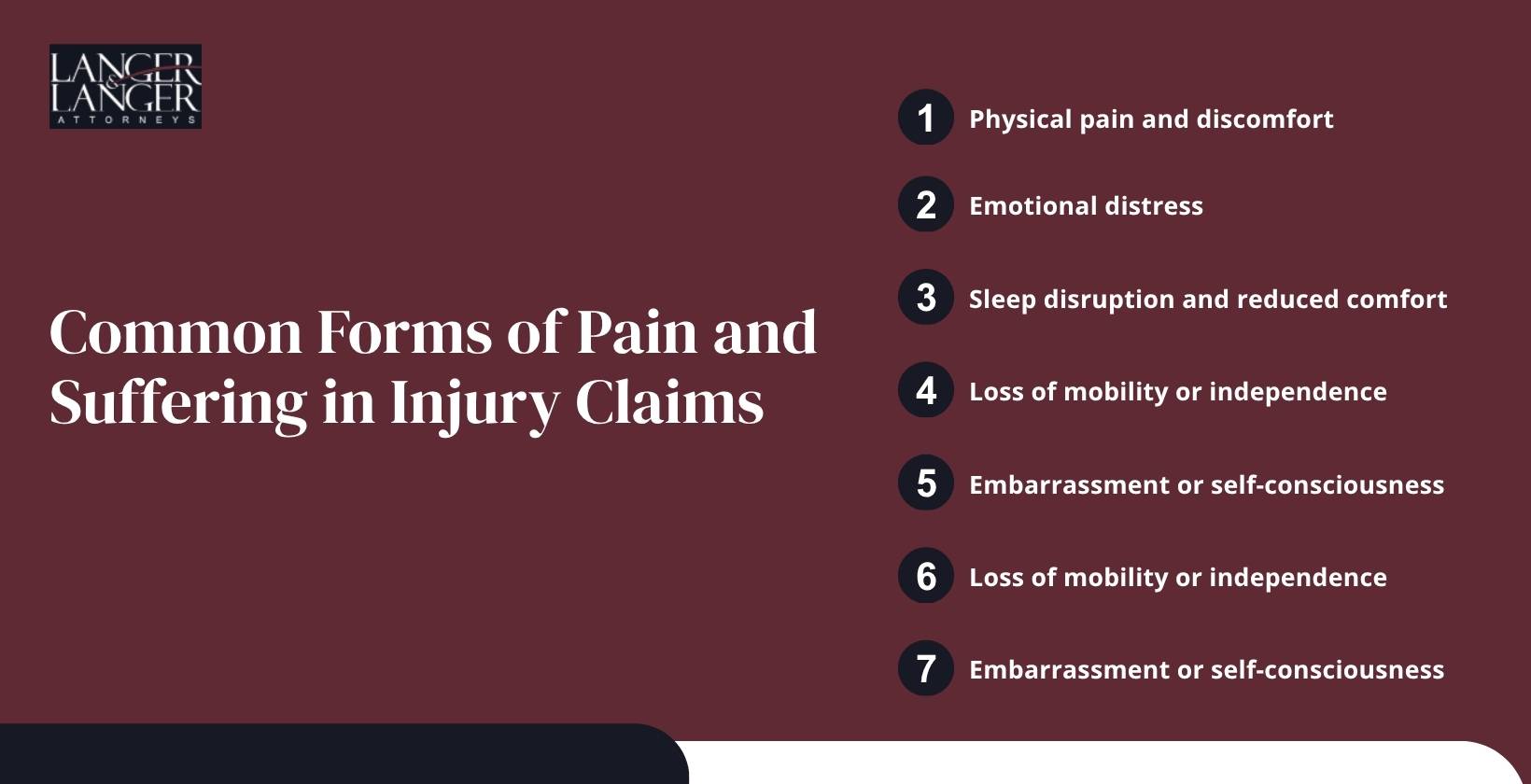
The most common forms include:
- Physical pain and discomfort: Ongoing pain, soreness, stiffness, headaches, nerve symptoms, physical anguish, and other physical effects that continue after the accident.
- Emotional distress: Anxiety, depression, fear, mental anguish, trauma-related symptoms, and the emotional strain that can come with living through a serious injury.
- Sleep disruption and reduced comfort: Trouble sleeping through the night, pain that interrupts rest, or discomfort that makes normal routines harder.
- Loss of mobility or independence: Difficulty driving, walking, lifting, exercising, or handling normal tasks without help.
- Embarrassment or self-consciousness: Visible scarring, disfigurement, or other lasting changes that affect confidence and social comfort.
- Loss of enjoyment of life: Pulling back from hobbies, family activities, work, exercise, or social events because the injury changed what daily life looks like.
- Loss of companionship: When an injury affects the person’s ability to maintain relationships, share in family life, or be present for a spouse or children in the ways they were before the accident.
Is There a Formula for Calculating Non-Economic Damages in Indiana?
No. Indiana law sets no fixed formula, which means insurance adjusters and juries each apply their own standards when putting a number on pain and suffering. That gives documented evidence far more weight than most injured people realize. Two estimation methods, the multiplier method and the per diem method, come up regularly in these claims, and understanding how they work can make settlement discussions easier to follow.
How Pain and Suffering Are Usually Estimated in Indiana Claims
These methods do not control the outcome, which still depends on the facts and the strength of the evidence.
Multiplier Method
The multiplier method starts with economic damages such as medical bills, rehabilitation costs, lost wages, and lost future earnings, then applies a number based on how seriously the injury affected the person’s life. More invasive treatment, a longer recovery, chronic pain, or lasting limitations can carry real weight, but the multiplier is never fixed.
For instance, say someone suffers a herniated disc, undergoes physical therapy for several months, and accumulates $22,000 in medical bills and lost wages. With a 2.5 multiplier applied to reflect the severity of treatment and recovery, the estimated pain-and-suffering figure would be $55,000. That brings the total claim to $77,000.
Per Diem Method
The per diem method assigns a daily value to the injured person’s suffering and applies it over the recovery period. The daily amount and the timeline still need to be credible and supported by the medical record.
For example, if a daily rate of $200 is assigned and the recovery period spans 180 days, the estimated pain and suffering total would be $36,000.
Why These Methods Are Estimation Tools, Not Legal Rules
Neither the multiplier method nor the per diem method is required by Indiana law. Both can help frame settlement discussions, but the real strength of a claim comes from the evidence, the treatment history, and how clearly the injury changed the person’s life.
What Factors Affect Pain and Suffering Value Most
Two people can be injured in similar accidents and still end up with very different pain and suffering values. Valuation is driven by facts: recovery, pre-injury lifestyle, and the extent of the disruption all shape the outcome. Aggravation of a pre-existing condition matters too. If the accident worsened an existing injury or condition, the claim covers the gap between where the person was before and where they are now.
Severity of the Injury and Type of Treatment
A fracture requiring surgery, a back injury treated with injections and months of physical therapy, or a hospitalization followed by specialist care all signal that the injury was significant. More invasive treatment and a more serious diagnosis tend to support higher pain and suffering values. The treatment record does not decide value by itself, but it shows what the person went through in concrete, verifiable terms.
Length of Recovery and Whether Symptoms Continue
A claim where symptoms resolve quickly looks very different from one where pain lasts for months or flare-ups keep interrupting daily life. Ongoing pain, delayed healing, and lingering limitations strengthen the claim because they show the harm did not end with the first round of treatment. Maximum medical improvement, the point at which a doctor determines further recovery is unlikely, is a key marker. The person’s condition at that point often determines how pain and suffering damages are valued going forward.
Impact on Work, Sleep, Mobility, and Daily Life
Pain and suffering are often judged by how much the injury changed daily life. Trouble sleeping, difficulty driving, missed work, limited parenting, giving up exercise, or needing help with basic tasks can all carry real weight in a claim.
Permanent Harm, Scarring, or Chronic Pain
Standard personal injury claims carry no cap on pain and suffering damages in Indiana, which matters most when injuries are permanent. Permanent disability, nerve damage, chronic pain, visible scarring or disfigurement, and long-term emotional distress all point to suffering that continues beyond the recovery period. Catastrophic injuries that permanently alter a person’s abilities support diminished quality of life claims. These focus on ongoing suffering going forward, not only what the person has already endured.
How Can You Support and Protect Your Pain and Suffering Claim?
Pain and suffering are personal, but they still have to be supported by proof. The clearer the documentation is, the easier it is for an insurance company, lawyer, or jury to understand what the injury has actually cost you beyond medical bills and lost wages.
The proof that carries the most weight includes:
- Medical records and treatment history: Diagnosis notes, imaging, prescriptions, physician notes, therapy records, referrals, progress notes, and follow-up visits form the backbone of the claim. They show how serious the injury was, how long symptoms lasted, and whether treatment stayed consistent. Thin or incomplete medical records weaken the claim but do not automatically end it. A pain journal, witness accounts, and employer records documenting missed work can fill those gaps.
- Mental health records and symptom tracking: When an injury causes anxiety, sleep disruption, emotional distress, or trauma-related symptoms, records from counselors or therapists, psychological evaluations, symptom logs, and a pain journal can help show those effects over time. They can also help explain flare-ups, missed activities, and changes that do not always appear clearly in a standard medical chart.
- Testimony that adds human context: The injured person can explain day-to-day pain, limits, and changes in routine. Family members and friends can describe what they observed after the injury. Medical providers and healthcare providers can connect the symptoms to the injury itself. In serious claims, vocational experts can show how the injury affects earning capacity.
- Prompt evaluation and consistent care: Getting checked early, following treatment recommendations, and avoiding long gaps in care can make the claim easier to understand and harder to challenge.
- Organized records and daily-life documentation: Bills, treatment notes, work-loss information, photographs of injuries taken at different stages of recovery, and a clear record of how the injury affected sleep, mobility, exercise, parenting, household tasks, mood, and normal routines all help build a complete picture.
Indiana Rules That Can Change Recovery
Even when pain and suffering are well-documented, Indiana law can still affect how much a person may recover. Fault rules, filing deadlines, and the type of claim involved can all change the outcome.
Comparative Fault Can Reduce or Bar Compensation
Indiana follows a modified comparative fault rule (IC 34-51-2). If you share blame for the accident, your recovery can be reduced by that percentage. If you are found more than 50% at fault, you may recover nothing. For example, a $100,000 claim would be reduced to $75,000 if you were found 25% at fault.
Filing Deadlines Can Affect the Claim
Waiting too long can hurt a claim, no matter how strong the evidence is. Many Indiana injury claims are subject to a two-year filing deadline (IC 34-11-2-4), and claims involving government entities require written notice within 180 days under IC 34-13-3-8. Most Indiana injury claims settle within 12 to 18 months, depending on injury complexity, liability disputes, and whether the case moves into litigation.
Some Case Types Involve Different Legal Limits
Standard personal injury claims carry no cap on pain and suffering damages. Medical malpractice claims are different. Under IC 34-18, total recovery is capped at $1.8 million per occurrence, and these claims involve a proposed complaint process and medical review panel before litigation can proceed. Claims against government entities may carry separate notice rules and procedures as well. The type of case affects both the timeline and the rules that apply to recovery.
Common Mistakes That Weaken a Pain and Suffering Claim
The biggest problems in a pain and suffering claim often have less to do with the injury itself and more to do with how the claim develops over time.
Gaps in Treatment or Inconsistent Complaints
Missing appointments, long gaps in treatment, and changing descriptions of symptoms can all hurt a claim. An insurer or jury may see those problems as a sign that the injury was not as serious as claimed or that something else caused the symptoms later. Consistency matters from the first visit through the final treatment.
Settling Before the Medical Picture Is Clear
Once a release is signed, the claim is over, even if pain worsens, new limits appear, or future treatment becomes necessary. A quick offer may seem fair at first, but it can fall well short if the full impact of the injury is not yet known. Reaching maximum medical improvement before settling gives a much clearer picture of what the claim is actually worth.
What a Lawyer Does When Valuing Pain and Suffering Damages in Indiana
Valuing pain and suffering takes more than looking at bills and assigning a number. At Langer & Langer, our personal injury attorneys in Indiana handle each of these steps so nothing that affects the value of your claim gets missed.
- Gather and organize medical records, imaging, treatment notes, and symptom history to build a complete picture of the injury and its effects.
- Identify work-loss information, daily-life documentation, and other proof that shows how the injury changed sleep, mobility, routine, and independence.
- Connect the treatment history to the real-life disruption in a way that is clear and credible to an insurer or jury.
- Respond to low valuations with evidence rather than assumptions when the insurance company questions what the injury actually costs.
- Assess how Indiana rules, including comparative fault and applicable filing deadlines, may affect what the claim is worth and what recovery looks like.
- Review any health insurance liens and determine whether subrogation amounts can be negotiated down before the case closes, since outstanding liens directly reduce what the client takes home.
How Attorney Fees Usually Work in Indiana Injury Cases
Most Indiana personal injury lawyers work on a contingency fee basis. The attorney’s fee comes out of the recovery rather than being billed upfront. If there is no recovery, there is no attorney’s fee owed. Case costs such as filing fees, medical record charges, and expert fees are separate from attorney fees. A good fee agreement explains how both are handled before you commit to anything.
Find Out What Your Pain and Suffering Claim Is Worth in Indiana
Pain and suffering damages are rarely straightforward to value, and the first offer from an insurance company often does not reflect the full picture. At Langer & Langer, we review Indiana personal injury claims, assess what the documented evidence actually supports, and give you a straight answer on where your claim stands. Call 219-464-3246 to schedule a confidential consultation.