

In many minor car accidents, you may be able to handle the claim on your own when no one is hurt, the damage is limited, and the insurance company treats the claim fairly. Legal help becomes more important when injuries appear later, fault is disputed, or the insurer delays the process, denies part of the claim, or offers less than the evidence supports.
The problem with a “minor” accident is that it does not always stay minor. A low-damage crash can still lead to delayed injuries, hidden damage, or insurance issues that become harder to deal with over time. If you are unsure how to handle the claim, the safest move is to stay factual, keep your documentation, and get clear guidance before the situation becomes harder to manage.
Langer & Langer can help you understand your options and decide on the next step.
Key Takeaways
- “Minor” describes visible damage; it does not guarantee that injuries or legal issues are minor.
- Examples of minor accidents include fender‑benders, parking lot bumps, side‑swipes, and low‑speed rear‑end collisions.
- Symptoms such as headache, dizziness, or muscle pain can emerge hours or days later, so don’t assume you’re unharmed.
- Indiana follows a modified comparative fault system: your compensation can be reduced if you’re partly at fault and barred if you’re more than 50% responsible.
- You must report accidents involving injury, death, or property damage over $1,000 to the police and file a report with the Indiana Bureau of Motor Vehicles within 10 days or risk fines and license suspension.
- Polite adjusters still look for reasons to minimize payouts or deny claims. Don’t assume “no‑fault” coverage applies in Indiana; the at‑fault driver’s insurer is typically responsible.
What “Minor Accident” Usually Means, and What It Doesn’t
A minor car accident usually means a low-speed crash with limited visible damage and no obvious emergency at the scene. Common examples include fender-benders, parking lot bumps, side-swipes, and low-speed rear-end collisions.
What it does not automatically mean is that the claim is simple. A crash can look minor but still involve hidden vehicle damage, delayed pain, or insurance pushback. Damage behind the bumper, soft-tissue injuries, concussions, and even anxiety symptoms may not show up right away.
Common Misconceptions About Minor Car Crashes
These assumptions often cause problems later:
- It’s not worth the hassle: Even small claims need clear records. Without documentation, the other driver or insurer may dispute what happened.
- I wasn’t hurt, so there’s no case: Some injuries show up hours or days later, and delays in treatment can weaken your claim.
- The insurance company will handle it fairly: Adjusters may still question injuries, request recorded statements, or offer less than the claim is worth.
- If I was partly at fault, I get nothing: In Indiana, you may still recover damages if you were 50% or less at fault, though your recovery can be reduced.
When You Can Handle a Minor Accident Claim Yourself in Indiana
Many drivers successfully resolve minor claims without legal representation. You may not need a lawyer if:
- No one is injured: Both drivers and passengers are genuinely unhurt, and no symptoms appear later.
- Fault is clear: The other driver admits responsibility, and their insurer accepts liability.
- Damage is minimal: Repair costs fall within insurance policy limits, and the insurer agrees to pay full repair estimates without dispute.
- The claims process moves smoothly: The adjuster communicates promptly, doesn’t pressure you for statements, and offers fair compensation based on documentation.
Even in these situations, stay vigilant. Keep records, follow up on repairs, and watch for delayed injuries or new expenses. If anything becomes complicated, an adjuster denies part of the claim, a repair shop finds hidden damage, or you start experiencing pain, consult an experienced Valparaiso car accident attorney.
Reasons You Might Need a Lawyer for a Minor Accident
Most minor crashes can be resolved without formal legal representation when nobody is hurt, fault is undisputed, and the insurance company pays for repairs without a dispute. However, certain red flags suggest it’s time to consult an attorney:
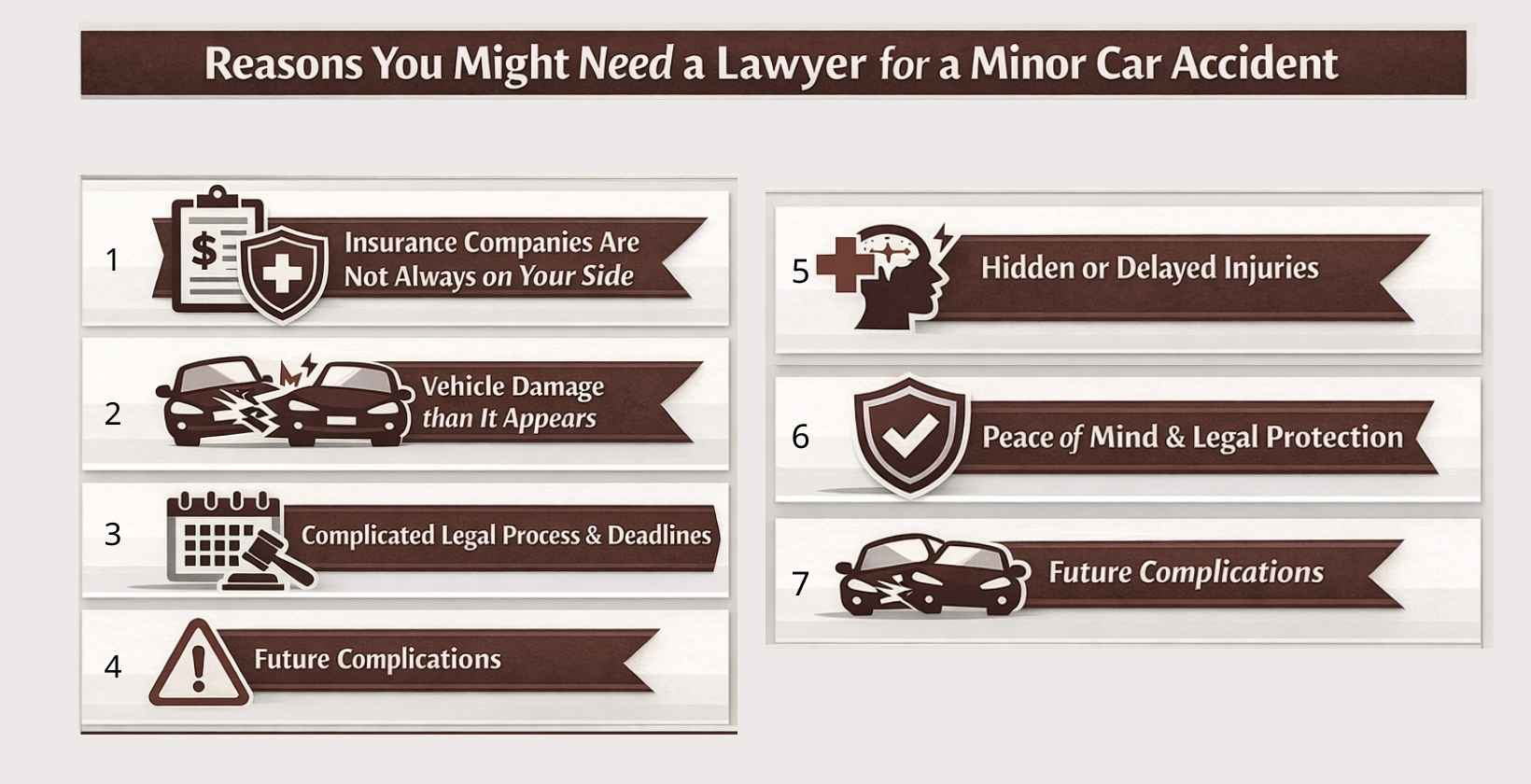
Insurance Companies Are Not Always on Your Side
Insurance adjusters aim to settle claims for as little as possible. Signs of trouble include early pressure for a recorded statement, questions that invite speculation, or settlement discussions before a full vehicle inspection. A lawyer can step in to handle communications, prevent inadvertently harming your case, and pursue the full value of your claim.
Will a small fender bender increase my insurance?
It can. If you’re found at fault, your premium may rise at renewal, or you may lose an accident-free discount. Some insurers also consider claim history even when the damage is minor. That is one more reason to stay factual, avoid guessing, and keep your records consistent.
Hidden or Delayed Injuries
Low‑speed impacts can still cause soft‑tissue damage, concussions, or spinal injuries that surface hours or days later. If you told the other driver or insurer you were “fine” at the scene but later experience headaches, stiffness, or numbness, expect pushback. Early medical care helps connect those symptoms to the crash and makes the claim easier to support.
Vehicle Damage May Be Worse Than It Appears
Modern vehicles use plastic bumper covers to conceal energy‑absorbing components and safety sensors. What looks like a scuff can hide broken brackets, misalignment, or damaged collision‑avoidance systems. Photo estimates may seem low until the body shop removes panels. An attorney can work with repair experts to document hidden damage and challenge an insurer’s low valuation.
Fault or Liability Disputes
Minor accidents often leave limited evidence. Parking lot collisions, merges, and side‑swipes can produce conflicting stories. In Indiana, fault matters because any percentage of blame assigned to you reduces your recovery, and being more than 50% at fault bars compensation. Gathering photos, witness statements, and accident‑scene notes early is essential. If the other driver changes their story or you receive a summons, consult a lawyer to preserve evidence and protect your interests.
Complicated Legal Process and Deadlines
Indiana law requires you to report accidents involving injury, death, or property damage over $1,000 to law enforcement and to file an accident report with the Bureau of Motor Vehicles within ten days. Failure to report can lead to fines, license suspension, and difficulty recovering compensation. Additionally, you generally have two years from the date of the accident to file a lawsuit for injuries or property damage. An attorney ensures you meet these deadlines, gathers necessary documents, and helps you avoid unintentional mistakes that could jeopardize your claim.
Peace of Mind and Legal Protection
Navigating insurance paperwork, repair estimates, medical bills, and repeated adjuster calls can be exhausting, especially while you are recovering from an injury or balancing work and family. Hiring a legal counsel transfers those burdens to someone familiar with the process. A lawyer’s presence signals to insurers that you’re serious about fair compensation, reducing the likelihood of lowball offers and unnecessary delays.
Future Complications
What starts as a simple claim can change if symptoms get worse, treatment continues, repair costs rise, or the other side starts disputing fault. Getting guidance early can help you avoid being boxed into an incomplete version of what happened.
What to Do Right After a Minor Crash to Protect Your Claim
What you do right after a minor crash can affect both your health and your claim. Focus on safety first, then create a clear record of what happened.
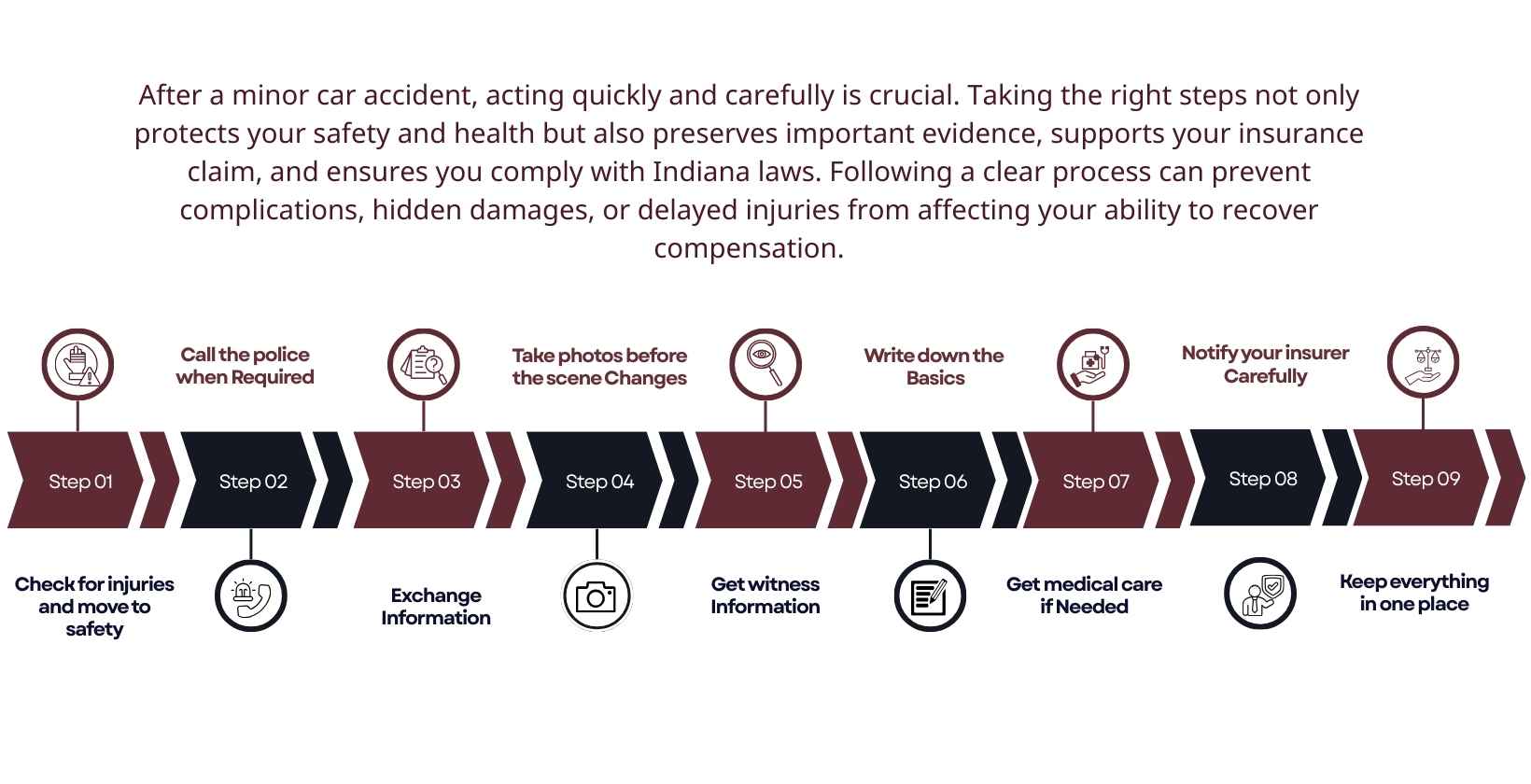
- Check for injuries and move to safety: If anyone is hurt or traffic is blocked, call 911. If it is safe, move the vehicles out of traffic and turn on your hazard lights.
- Call the police when required: In Indiana, you should report a crash involving injury, death, damage to property other than the vehicles, or vehicle damage that appears to exceed $1,000.
- Exchange information: Get the other driver’s name, phone number, license plate number, and insurance details.
- Take photos before the scene changes: Photograph both vehicles, visible damage, the road, traffic signs, and anything else that helps show how the crash happened.
- Get witness information if anyone saw it: A neutral witness can help if the other driver changes their story later.
- Write down the basics: Note the time, location, direction of travel, and what happened. Stick to facts and avoid guessing or admitting fault.
- Get medical care if anything feels off: Pain, stiffness, dizziness, headaches, or numbness can show up later, even after a low-speed crash.
- Notify your insurer carefully: Report the crash promptly, but keep your statement factual and brief.
- Keep everything in one place: Save photos, the police report number, repair estimates, receipts, medical records, and claim communications.
Avoid common mistakes like saying you are fine too soon, guessing about fault, delaying medical care, or accepting a settlement before you understand the full damage.
How Do Indiana Laws Affect Minor Accidents or No-Fault Claims?
Indiana is not a no-fault state for car accidents. In a minor car accident claim, fault still matters because the at-fault driver’s liability insurance is usually the main source of payment. Indiana also follows a modified comparative fault rule, so shared blame can reduce what you receive, and being more than 50% at fault can bar recovery.
- Statute of limitations: Most personal injury and property damage lawsuits in Indiana must be filed within two years of the accident date. Claims against government entities often have shorter deadlines and specific notice requirements.
- Uninsured/Underinsured Motorist Coverage (UM/UIM): If the other driver lacks insurance or has insufficient coverage, your own UM/UIM policy may help. Indiana insurers must offer this coverage; you can reject it only in writing. Claims under UM/UIM coverage still require proof of fault and damages, so document the scene thoroughly and keep copies of repair bills and medical records.
Consulting an Indiana car accident lawyer can help you understand these rules, protect your rights, and maximize your potential recovery.
Get Help With Minor Car Accidents From Langer & Langer
If your crash was “minor” but the claim does not feel simple, you do not have to sort it out alone. A quick conversation can help you understand what matters most, what to document next, and how Indiana law may affect your situation.
At Langer & Langer, we help people make sense of low-damage crashes that turn into insurance disputes, delayed-injury claims, or fault arguments. We can review the facts, explain your options clearly, and step in when the process starts working against you.
Call us at 219-464-3246 to discuss your situation or visit our office, located at 4 Indiana Ave, Valparaiso, IN 46383.