

Hospital discharge should happen only after the patient is stable, the care team has explained the next steps, and the support needed for recovery is in place. When that process is rushed or incomplete, patients and families may not realize there is a problem until symptoms worsen at home or a return to the emergency room becomes necessary.
An unsafe discharge, also called a premature discharge, happens when a hospital or medical facility releases a patient who is hemodynamically unstable (with unsafe blood pressure or poor circulation), still has pending critical test results, or does not have a safe home care plan in place. Unsafe discharge can lead to worsening symptoms, avoidable complications, preventable readmission, or even death after release. In Indiana, a discharge like this may support a medical malpractice claim if it fell below the accepted standard of care and directly caused harm.
Knowing the signs of an unsafe discharge can help patients and families identify problems early, ask better questions before going home, and act quickly if recovery does not go as planned.
Key Takeaways About Unsafe Hospital Discharges
- An unsafe hospital discharge happens when a patient is sent home before it is reasonably safe to leave.
- A safe discharge should include medical stability, clear written instructions, follow-up care, and needed support at home.
- Warning signs may include worsening symptoms, pending test results, no follow-up plan, or missing home care arrangements.
- Unsafe discharge can lead to complications, medication mistakes, emergency room visits, or preventable readmission.
- In Indiana, an unsafe discharge becomes a legal issue only if the decision fell below the standard of care and caused harm.
Unsafe Discharge vs Early Discharge: What's the Difference?
An early discharge is mainly about timing. An unsafe discharge is about whether the patient was actually ready to leave and whether the hospital put the right support in place. A patient can be discharged earlier than expected and still be safe if the patient is medically stable, has clear instructions, and has proper follow-up arranged. A discharge can also happen after several days and still be unsafe if those safeguards are missing.
| Factor | Early Discharge | Unsafe Discharge |
|---|---|---|
| Definition | Discharge that happens sooner than the average hospital stay | Discharge that occurs without adequate safety and preparation |
| Clinical Readiness | Patient is medically stable at release | Patient is not clinically stable at release |
| Discharge Planning Elements | Clear instructions, medication reconciliation, and follow-up are arranged | Instructions, follow-up, or support services are incomplete or unclear |
| Patient Capacity and Support | Patient understands the plan and has needed support | Patient lacks understanding, capacity, or reliable support |
| Typical Outcomes | Recovery continues as planned | Higher risk of complications or readmission after discharge |
| Evaluation Standard | Measured by length of stay and timing | Measured by compliance with the clinical standard of care |
Why Can Unsafe Discharges Happen?
Unsafe discharges do not always happen because a patient looks ready to go home. In some cases, the problem is rushed planning, incomplete communication, or poor coordination between the hospital, the patient, and the next care provider. Discharge is one of the most vulnerable points in a patient’s care, especially when follow-up services, medication changes, or caregiver instructions are not clearly arranged.
Common reasons unsafe discharges can happen include:
- Incomplete discharge planning, including unclear instructions, missed medication reconciliation, or poor follow-up coordination.
- Communication breakdowns between providers, patients, and caregivers.
- Hospital capacity pressures, including overcrowding and bed demand.
- Payment and administrative pressures, which can affect how quickly hospitals try to move patients through the system.
- Failure to account for the home situation, including mobility limits, lack of caregiver support, or language barriers.
In rare situations, discharging or transferring a patient for financial reasons before appropriate screening and stabilizing treatment can raise separate concerns under EMTALA (Emergency Medical Treatment and Labor Act), a federal law requiring hospitals to stabilize patients regardless of their ability to pay.
What Are the Signs of an Unsafe Discharge?
Families often recognize the warning signs of an unsafe discharge during the discharge conversation or within the first day or two at home. These red flags usually involve medical readiness, discharge instructions, follow-up care, or the level of support available after release.
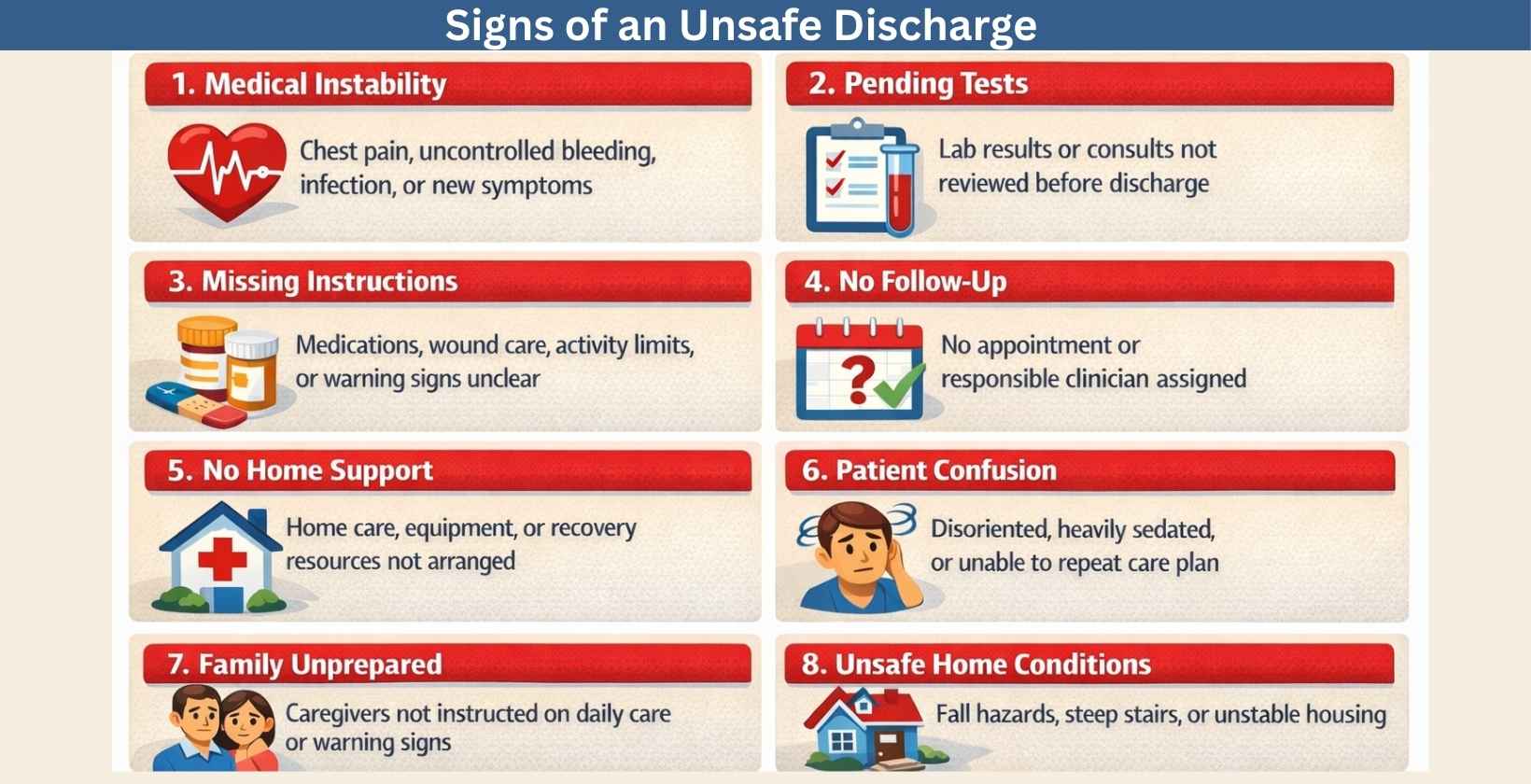
Medical Instability at the Time of Discharge
Ongoing chest pain, uncontrolled bleeding, unstable vital signs, worsening infection, or new symptoms at release suggest a hospital discharge with symptoms and signal that the patient was not medically ready to leave.
Pending Test Results or Unfinished Evaluation
Lab results, imaging studies, or specialist consults remain pending, unreviewed, or not communicated before discharge. The discharge decision moves forward before the full medical evaluation is complete.
Missing or Incomplete Discharge Instructions
Written directions for medications, wound care, activity limits, warning signs, or return precautions are unclear, inconsistent, or absent. In a no-discharge instructions hospital situation, patients leave without clear written guidance.
No Follow-Up Appointment or Care Handoff
No follow-up visit is scheduled, no referral is placed, and no specific clinician or facility is identified as responsible for next steps. The care transition ends without a defined handoff.
No Home Care, Equipment, or Support Services
Needed home health, in-home PT or OT, oxygen, mobility aids, medical supplies, or transportation assistance are not arranged. A hospital discharge with no home care scenario leaves required recovery resources uncoordinated.
Patient Confusion or Lack of Capacity to Consent
The patient shows disorientation, heavy sedation, cognitive impairment, or inability to repeat the plan back. A confused patient discharged situation raises concerns about decision-making capacity at the time of release.
Family or Caregiver Left Unprepared
The caregiver receives no instruction on daily care tasks, medication timing, or warning signs. The caregiver leaves without clear guidance on whom to contact with concerns.
Unsafe or Unassessed Living Conditions
The home includes steep stairs, fall hazards, a lack of safe bathroom access, or unstable housing conditions. In an unsafe home discharge situation, the environment does not support realistic recovery.
Concerned that discharge happened too soon? Keep the discharge papers, write down what happened, and get medical help right away if symptoms worsen. If the discharge led to serious complications, readmission, or other harm, an Indiana medical malpractice attorney can help you understand whether you may have a claim.
Who Is Most at Risk After an Improper Discharge?
Some patients face a higher risk of harm after discharge because they need closer monitoring, clearer instructions, or more support at home. When discharge planning is rushed or incomplete, these patients are more likely to suffer complications, confusion, or readmission.
- Older adults: Older patients experience higher fall risk, medication sensitivity, and slower recovery. They rely more on precise discharge planning and caregiver support after hospitalization.
- Patients with cognitive impairment or delirium: Memory loss, confusion, or reduced decision-making ability increases the chance of misunderstanding instructions and missing follow-up care.
- Patients with mental health conditions or substance use disorders: These patients depend on coordinated outpatient services and consistent communication to maintain treatment stability after discharge.
- People with limited English proficiency or low health literacy: Language barriers and difficulty interpreting medical information increase the likelihood of medication errors or missed appointments.
- Patients with multiple chronic conditions or complex medication regimens: Managing diabetes, heart disease, kidney disease, or similar conditions requires precise medication timing and close follow-up coordination.
- Patients without stable housing or reliable caregiver support: Recovery becomes harder when safe housing, transportation, or day-to-day assistance is unavailable.
Recognizing these risk factors can help patients, families, and care teams ask better questions before discharge and reduce the chance of preventable harm.
What Can Happen After an Unsafe Hospital Discharge?
The effects of an unsafe hospital discharge often show up quickly. A patient may seem stable at discharge, then worsen at home within hours or days because treatment was incomplete, follow-up care was not arranged, or warning signs were missed.
Health Risks After Premature Discharge: Readmission, Infection, Injury
Common hospital discharge health risks include:
- Worsening symptoms that require urgent care or an ER visit.
- Unplanned readmission after discharge within days or weeks.
- Post-surgical or wound infections that develop at home.
- Falls related to weakness, dizziness, or mobility limits.
- Medication-related complications such as adverse reactions or dosing errors.
- Delayed healing that extends the overall recovery period.
Financial Impact: Higher Costs and Longer Recovery
The cost of unsafe discharge often reaches beyond medical bills and affects everyday life:
- Additional emergency room visits and repeat hospital stays.
- New prescriptions or increased pharmacy expenses.
- Home health services or paid caregiver support.
- Transportation costs for follow-up appointments.
- Missed work for the patient or family members.
- Increased caregiver time and emotional strain at home.
When Is Unsafe Discharge Medical Malpractice in Indiana?
In Indiana, an unsafe discharge becomes medical malpractice only when it meets specific legal requirements. A rushed discharge, poor communication, or a frustrating hospital experience does not automatically create a claim. The issue becomes malpractice when the discharge decision falls below the accepted medical standard of care and directly causes harm.
What Must be Proven in an Unsafe Discharge Malpractice Claim?
A valid unsafe discharge claim usually depends on four elements:
- Duty: A provider-patient relationship existed, and the hospital or medical team owed a duty of care during the discharge process.
- Breach: The discharge decision, discharge planning, or follow-up coordination fell below what a reasonably careful provider would have done in similar circumstances.
- Causation: The discharge failure directly contributed to the patient’s injury or medical setback.
- Harm: The patient suffered measurable damage, such as readmission, complications, delayed recovery, additional treatment, or other documented losses.
All four elements matter. Without proof of both a breach and resulting harm, an unsafe discharge concern may not rise to malpractice under Indiana law.
Who May be Responsible for an Unsafe Discharge?
Responsibility depends on who made the discharge decision, who handled the discharge plan, and who was responsible for follow-up care. In some cases, more than one person or entity may share responsibility.
Potentially responsible parties may include:
- The hospital or health system, if unsafe policies, poor supervision, or discharge planning failures played a role.
- Treating physicians or hospitalists, if the patient was cleared before becoming medically stable.
- Nursing staff, if symptoms, readiness concerns, or discharge education were not properly documented or communicated.
- Case managers or discharge planners, if follow-up care, equipment, transportation, or home services were not properly arranged.
- Consulting specialists, if their input affected discharge timing or medical clearance.
In some situations, a rehabilitation center, skilled nursing facility, or nursing home may also become relevant if a transfer or placement was mishandled.
What Evidence Can Support an Unsafe Discharge Claim?
These cases often turn on records, timing, and what happened shortly after discharge. Helpful evidence may include:
- the discharge summary and written instructions
- nursing notes and vital sign records
- medication reconciliation records
- lab and imaging results
- case management or social work notes
- follow-up and referral records
- ambulance, ER, or readmission records
- family notes about symptoms, calls, and discharge conversations
The strongest claims usually show both what the hospital did at discharge and what happened in the hours or days that followed.
What Damages May be Available in a Successful Unsafe Discharge Claim?
If an unsafe discharge rises to medical malpractice in Indiana, damages may include added medical expenses, lost income, pain and suffering, and other losses tied to the harm caused by the discharge. In some cases, compensation may relate to readmission, emergency treatment, extended recovery, or lasting complications.
Indiana medical malpractice claims are also subject to statutory limits, and some compensation may involve the Indiana Patient’s Compensation Fund.
Patient and Family Rights During Hospital Discharge
Before leaving the hospital, patients and their families should feel comfortable asking questions and requesting clear written information. A safe discharge depends on understanding the care plan, the next steps, and what warning signs to watch for at home.
You can ask for:
- Written discharge instructions and a medication list so you know what care is needed at home.
- Interpreter services or translated materials if English is not your preferred language.
- Clear follow-up information about who you should see next and when.
- A meeting with the charge nurse, case manager, or patient advocate if any part of the plan is unclear.
- A reassessment before discharge if symptoms continue or the patient does not seem ready to leave.
- Clarification about consent and decision-making capacity if the patient appears confused, sedated, or unable to understand the plan.
Clear answers and written instructions can make the transition home safer and less stressful.
What Should You Do If You Suspect an Unsafe Discharge?
If you believe a hospital discharge was unsafe, focus on your health first. Then gather the records and details that may help explain what happened.
Take these steps:
- Get medical help right away if symptoms worsen, new symptoms appear, or recovery declines. If needed, return to the emergency room.
- Keep all discharge paperwork together, including written instructions, prescriptions, medication lists, and follow-up information.
- Write down a timeline of what happened after discharge, including symptom changes, calls to the hospital, and any return visits for care.
- Record the names of staff members you spoke with and what you were told about discharge, follow-up care, or warning signs.
- Request your medical records from the hospital, including the discharge summary, nursing notes, vital sign records, and test results.
- Ask for clarification from the hospital unit or listed follow-up provider if any part of the discharge plan was unclear or incomplete.
If the discharge led to serious complications, readmission, or other measurable harm, it may be helpful to speak with an Indiana Hospital Malpractice Attorney about your options.
FAQs About Unsafe Hospital Discharge
The term “72‑hour rule” refers to different policies depending on the context. In Medicare billing, it bundles certain outpatient services provided within 72 hours before admission into the inpatient claim. It does not automatically require hospitals to keep patients for 72 hours.
Yes. A hospital may discharge you against your will if inpatient care is no longer medically necessary. However, the hospital must still provide a safe discharge plan, written instructions, and appropriate follow‑up information.
Possibly. You can sue only if the discharge fell below the standard of care and caused harm. Timing alone does not prove negligence. Evidence must show a breach of duty, causation, and measurable injury.
Ask for the discharge summary, written instructions, and a medication reconciliation list. These documents often include follow‑up details, activity limits, and warning signs requiring medical attention.
Indiana’s medical malpractice statute of limitations generally sets a two‑year deadline from the date of the alleged malpractice, with limited exceptions. Consult an attorney promptly to ensure your claim is filed on time.
Talk With an Indiana Medical Negligence Attorney About Your Unsafe Discharge
An unsafe discharge can leave patients and families dealing with worsening symptoms, unexpected readmission, and serious questions about what should have happened before release. If you believe a hospital sent you or a loved one home too soon and that decision caused harm, a careful legal review can help clarify your options under Indiana law.
At Langer & Langer, we help Indiana families review discharge records, medical timelines, and the events that followed a premature discharge. If you would like to discuss what happened, call 219-245-7229 or visit 4 Indiana Ave, Valparaiso, IN 46383, to request a free consultation.